


Most camping checklists are written by people selling you things. Two hundred items, three kinds of folding chair, and a gadget for turning a tin can into a toaster.
You don't need any of that.
What you need depends on where you're going, and Australia throws in some extras that overseas lists miss: serious sun, fire bans and long stretches with no phone signal. Here's the list that matters, with what to change for summer.
The short version
- Sort four things first: shelter, sleep, water and food.
- Carry more water than you think, as many sites have none.
- Bring a gas stove, as fire bans can stop campfires entirely.
- Pack a first aid kit that includes a snake bandage.
- Download maps before you lose signal.
Shelter

Practise putting your tent up at home. Doing it for the first time at dusk in the wind is how arguments start.
- Tent, poles and pegs
- Spare pegs and a mallet
- Groundsheet or tarp
- Guy ropes
- Shade tarp for summer
- Head torch for each person
- Spare batteries or a power bank
Sleep
A bad night's sleep ruins the next day, so this is where to spend a bit more.
- Sleeping bag suited to the season
- Sleeping mat or swag
- Pillow
- Warm layer for sleeping
- Earplugs, for the birds at dawn
Nights can be cold even when the days are hot, especially inland and in the mountains. Look at the overnight low before you pack, not the daytime high.
Water
This is the one thing you can't improvise. Many free camps have no drinking water at all, and creek water isn't safe to drink without treating it.
- Large water containers
- Personal bottle for each person
- Water purification tablets or a filter
- Separate water for washing up
Heads up: don't count on taps. Check the campground page before you leave, and fill up in the last town. In hot weather you'll drink far more than you expect, and you'll need extra for cooking.
Cooking and food

Must have
- Gas stove and spare gas
- Lighter and matches
- Pot, pan and utensils
- Esky and ice
- Rubbish bags
Nice to have
- Camp table
- Kettle or coffee plunger
- Second esky for drinks
- Tongs and a chopping board
Don't plan your meals around a campfire. In some places they're banned in warmer months, and on a Total Fire Ban day no fire may be lit in the open. In NSW that also covers solid and liquid fuel stoves, so check the rules for your stove and have a no-cook option in the esky.
Keep food sealed and off the ground. Possums, goannas and birds learn fast.
Top tip: freeze your water bottles and use them as ice in the esky. They last longer, and you get cold water as they melt.
Clothes
- Broad-brimmed hat
- Long-sleeve sun shirt
- Sturdy closed shoes
- Thongs for showers and camp
- Rain jacket
- Warm jumper
- Swimmers and a towel
Closed shoes matter for more than walks. They protect you from sticks, snakes and bull ants around camp.
Safety and first aid
A small kit you know how to use beats a big one you don't. Snake bites are rare, but in Australia a pressure bandage is standard kit.
- First aid kit
- Pressure bandage for snake bites
- Sunscreen, SPF 50 or more
- Insect repellent
- Any medication you need
- Offline maps on your phone
- Paper map for remote areas
- Tell someone where you're going
If you're going somewhere remote, think about a satellite messenger or PLB, because phone coverage ends quickly. Our guide to staying safe outdoors has more on this.
Sole Drift app
Get the app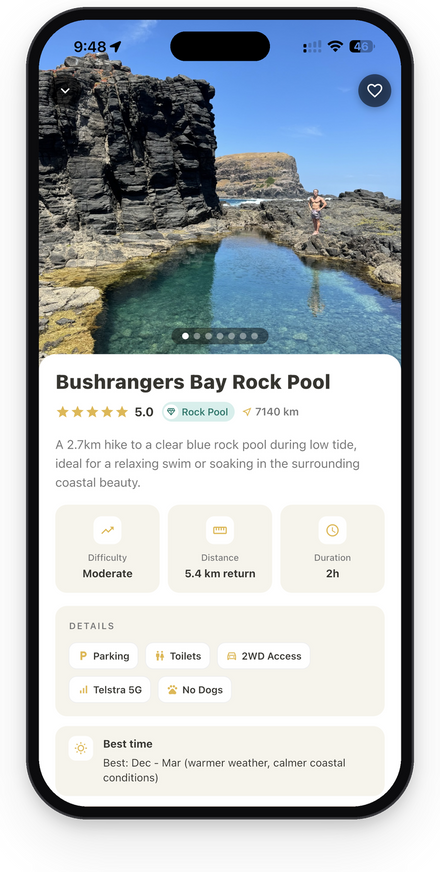
Packed for camp? Sole Drift shows swims, falls and lookouts nearby, from 1,100+ spots across Australia, with phone signal for each.
What changes in summer

Summer in Australia changes the list. It also changes when you should go at all.
Hot weather
- More water, always
- A shade tarp and pegs that hold
- Set up near shade, away from dead branches
- Rest through the middle of the day
Fire season
- Check bans before leaving home
- Know two ways out of your camp
- Install a fire alert app
- Leave early if conditions get worse
The NSW RFS bushfire guide for campers is worth a read before any summer trip. Victoria's advice is to plan when you'll leave if the weather changes or a bushfire starts. On high fire danger days, the best camping plan is often no camping at all.
Campfire rules, if you can have one
Where fires are allowed, use the fireplaces provided in parks. Parks Victoria's campfire safety rules are a good standard: an adult must stay awake and within 50 m, with line of sight, at all times. To put one out, use at least 10 litres of water, then check the remains are cool to touch. Sand or dirt isn't enough.
Leave no trace kit
Pack these too. They weigh next to nothing.
- Heavy duty rubbish bags
- Trowel for toilet stops
- Toilet paper in a sealed bag
- Biodegradable soap, used 50 m from water
Parks Victoria suggests you camp and wash up 50 m away from any water source. Read our Leave No Trace guide before your first trip.
Planning where to go? Our guide to free camping in NSW covers the rules, and the best national parks in NSW has good ideas. Going for longer? Our packing list for a year in Australia covers the bigger trip.
Picking a site? Here are the best places to go camping in NSW. Before you go, learn the first aid in our guide to snakes in Australia.
Next, plan your camp cooking, and add our hiking essentials if you're walking.
Looking for somewhere to go? See free camping in Victoria.
Still buying the basics? Our guide to camping gear for beginners covers what to buy first and what to borrow.
Bringing the dog? See camping with dogs. Going in summer? Read bushfire safety for travellers.
Not sure what goes in the first aid kit? See our first aid kit for camping list.
Questions people ask
What are the essentials for camping?
Shelter, a warm bed, water, food and a way to cook it. Add a head torch, first aid kit and sun protection, and you've got the basics.
What do people forget when camping?
Usually a lighter, a head torch, spare gas, enough water and rubbish bags.
Do I need a stove if I can have a campfire?
Yes. Fire bans can apply with little notice, so always bring a way to cook without one.
Should I carry a snake bandage?
Yes. A pressure bandage is standard first aid kit in Australia, as long as you know how to use it.
Keep it simple
You can always buy more gear later. Start with the basics, go somewhere close for one night, and work out what you actually missed.
Take all your rubbish home, keep fires legal and leave your campsite as if nobody was ever there.