


Search for the best hiking boots and most of what comes up was written for wet, cold hills. Waterproof everything. Thick leather. Ankle cuffs built for bog.
Then you take that boot up a sandstone ridge in January and your feet cook.
Australia asks more of a pair of boots than most countries. Red dirt and 38°C in the Centre. Soft sand on coastal walks. Sharp granite and sandstone. Leeches and mud in the wet tropics. And in Tasmania and the high country, snow in any month. This guide skips the brand rankings (we don't test gear, and no boot is best for every foot). It covers which type of footwear suits which ground, when a waterproof membrane helps and when it hurts, how to get the fit right, and how to look after a pair so it lasts.
The short version
- Trail shoes suit dry, hot, well formed tracks; boots suit rough, rocky, wet or alpine walking and heavy packs.
- A waterproof membrane is worth it in Tasmania, the Alps and the wet tropics, and often a sweaty mistake in summer heat.
- Fit beats features: try boots on in the afternoon, in your hiking socks, on a slope.
- Break them in before any big walk; Tasmania Parks lists worn in boots on its walker basics.
- Scrub soil off between parks to stop dieback spreading, and clean them before you fly into Australia.
Hiking boots vs mids vs trail shoes
This is the decision that matters most, and it comes before any brand.

Hiking boots come up over the ankle, with a stiffer sole and a tougher upper. They protect against rocks, keep grit out and hold your ankle on loose ground. They're heavier and hotter.
Mids sit just above the ankle bone. Softer than a full boot, lighter, and a popular middle ground for Australian day walks: some ankle cover against grass seeds, sand and scrub, without the full weight.
Trail shoes are low cut, light and cool. On dry, formed tracks they're less tiring, and they dry fast after a creek crossing. They give no ankle support and let sand and seeds in over the top.
| Hiking boots | Mids | Trail shoes | |
|---|---|---|---|
| Ankle support | Most | Some | None |
| Weight and heat | Heaviest, hottest | Medium | Lightest, coolest |
| Rocky, loose ground | Best | Good | Less protection |
| Sand and grass seeds | Kept out best | Mostly kept out | Get in over the top |
| Heavy overnight pack | Best | OK for lighter loads | Tiring for most walkers |
| Drying after a creek | Slowest | Medium | Fastest |
Parks agencies keep the advice simple. Parks Victoria's tips for a safe hike say to wear protective shoes, and gaiters if you can, because of snakes. South Australia's hot weather hiking advice says sturdy, enclosed footwear and long pants, for the same reason. Thongs and sandals are out on bush tracks, however hot it gets.
Top tip: if you walk a mix of terrain, buy for the hardest thing you'll do often, then add a lighter pair for easy summer walks later. Most keen walkers end up owning both.
Matching your boots to Australian terrain
Australia isn't one walking environment. It's about five, and they want different things from your feet.
| Terrain | Where you'll find it | What helps |
|---|---|---|
| Heat and red dirt | Central Australia, the outback, inland ranges | Breathable mids or trail shoes, light colours, low gaiters for dust and seeds |
| Soft sand | Coastal walks and beach tracks, dune country | Low cut shoes you can empty, or gaiters; skip heavy boots |
| Sandstone and granite | Coastal cliffs, gorges, ranges | Sticky rubber sole, a toe cap, a firm midsole |
| Wet tropics | Rainforest in far north Queensland | Enclosed shoes that drain or dry, grippy soles, leech socks or gaiters |
| Alpine and cool temperate | Tasmania, the Victorian and NSW high country | Waterproof boots, gaiters, room for warm socks |
Heat and the Centre
On the Larapinta Trail, NT Parks recommends walking only between April and September, and its safety advice warns that the Territory can top 40°C between October and April. Feet swell and sweat in that heat. A breathable shoe and a spare pair of socks to swap at lunch do more for blisters than any boot technology.
Sand and grass seeds
Sand gets in everywhere. A high boot keeps more out, but once it's in, it's harder to empty. On coastal walks many people go low cut and stop to tip their shoes out. Short gaiters fix both sand and the spiky grass seeds that work through mesh.
Rock
Sandstone is grippy when dry and slippery when wet or covered in sand. Granite can shred a soft sole. What you want here is a sole with grip that's stayed sharp, a rubber rand around the toe, and enough stiffness that you don't feel every edge.
Wet tropics
Queensland Parks' Daintree safety page says leeches live in leaf litter and wet vegetation, and recommends enclosed footwear, long pants and insect repellent. Tracks get slippery after rain, so grip matters more than waterproofing. In that humidity, nothing stays dry for long.
Alpine and Tasmania
Tasmania Parks' safety page says snow, hail, rain, wind and sun are possible at any time of year, and that summer snow in the high country isn't uncommon. The Overland Track surface is a mix of boardwalk, rock, roots and mud. This is the one part of Australia where the classic waterproof boot and gaiters make clear sense.

Waterproof boots in the heat: worth it?
Most boots in shops come with a waterproof breathable membrane (Gore-Tex is the best known example). In the UK that makes sense nearly all year. In Australia it's a real choice.

Go waterproof for
- Tasmania and the alpine high country
- Cool season walks with wet grass and mud
- Shallow puddles and boggy patches
- Overnight walks where dry feet matter at camp
Go breathable mesh for
- Summer day walks and anything inland
- Hot, humid walks in the tropics
- Walks with deep creek crossings
- Feet that sweat a lot
The catch with membranes in heat is simple. They breathe less than open mesh, so sweaty feet stay sweaty, and wet skin blisters faster. And a membrane won't stop water coming over the top. Once a waterproof boot floods in a deep creek, it takes far longer to dry than a mesh shoe that drains as you walk.
Heads up: wet feet aren't just uncomfortable. Healthdirect's blister advice points to well fitted shoes and moisture wicking socks to keep feet dry, because damp skin rubs. Skip cotton socks; merino or synthetic hiking socks are the usual pick.
How hiking boots should fit
Fit is where most bad boot experiences start. Different brands are built on different foot shapes, so the pair your mate swears by might wreck you.
- Shop in the afternoon. Feet swell through the day and more on a hot walk. Trying boots later gets you closer to your hiking size.
- Wear your hiking socks. Bring the socks you'll actually walk in, not thin everyday ones.
- Check the length. Unlaced, slide your foot forward and fit a finger behind your heel. Roughly a finger's width is the usual guide.
- Lace up and walk. Your heel should stay put. Any lift means blisters on a long day.
- Try the ramp. Walk firmly down a slope. If your toes hit the front, the boots are too short or too loose over the instep, and long descents will bruise your toenails.
- Compare. Try half a size up and down, and another brand. Take your time in the shop.
Wide feet are common, and many boots come in wide fittings. If you have high arches, flat feet or ongoing foot pain, ask about insoles, or see a podiatrist before spending big.
Sole Drift app
Get the app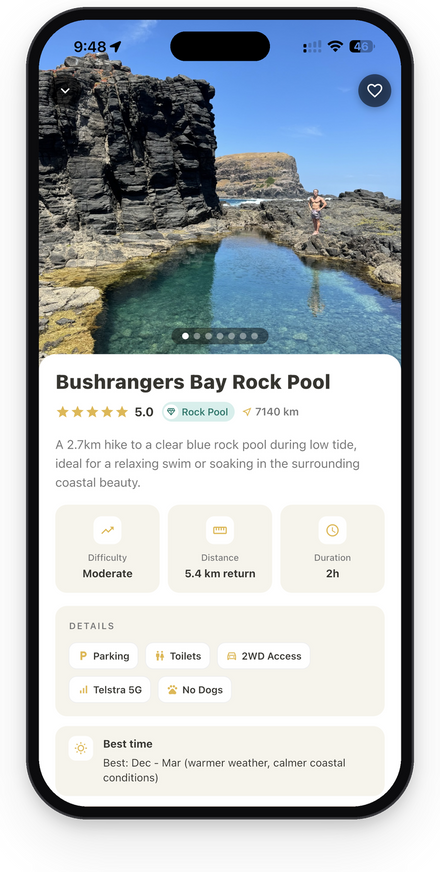
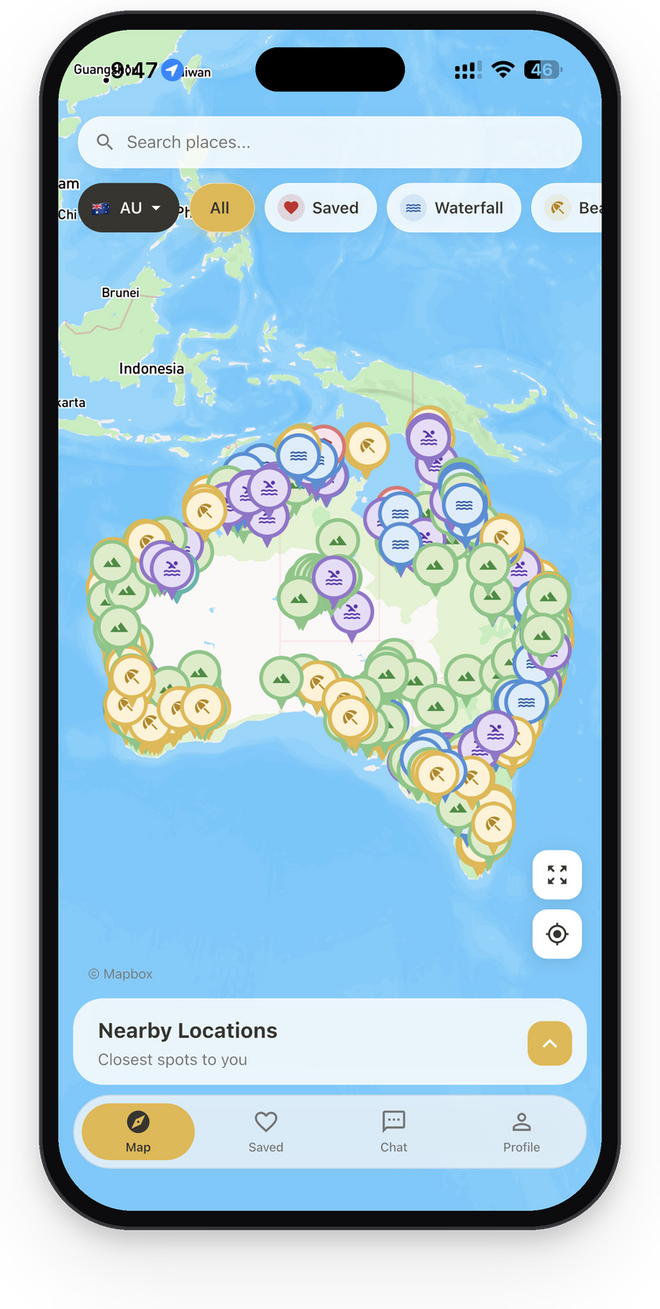
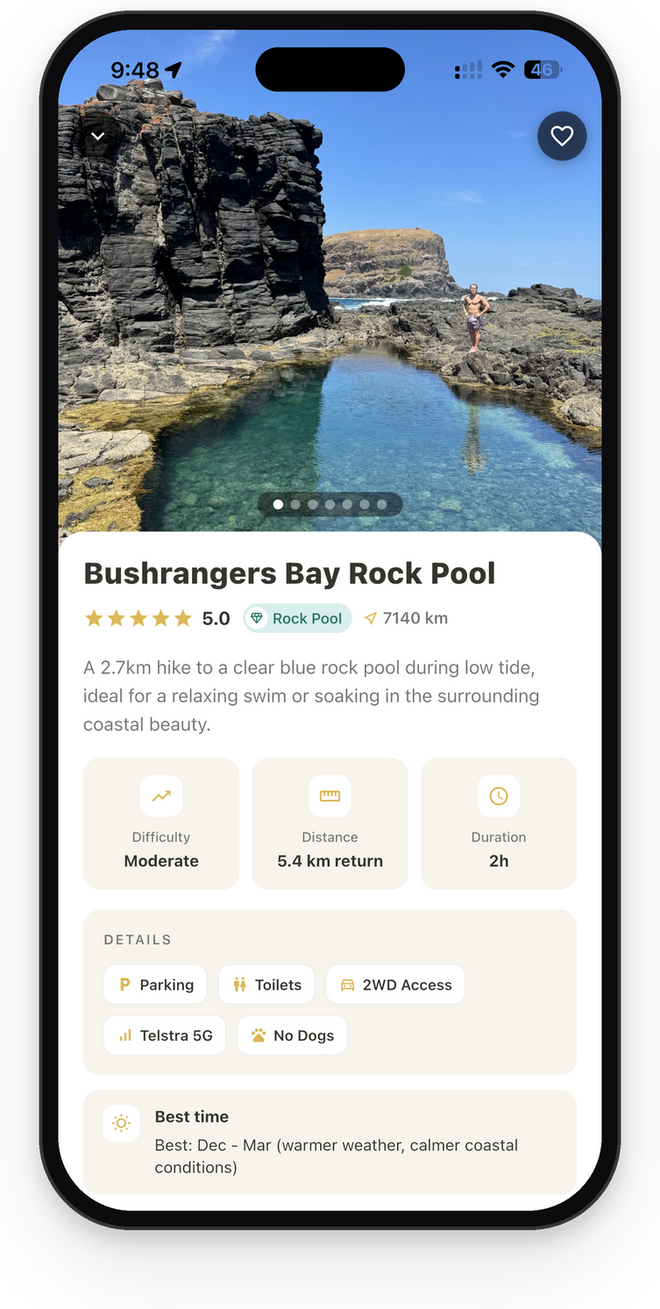
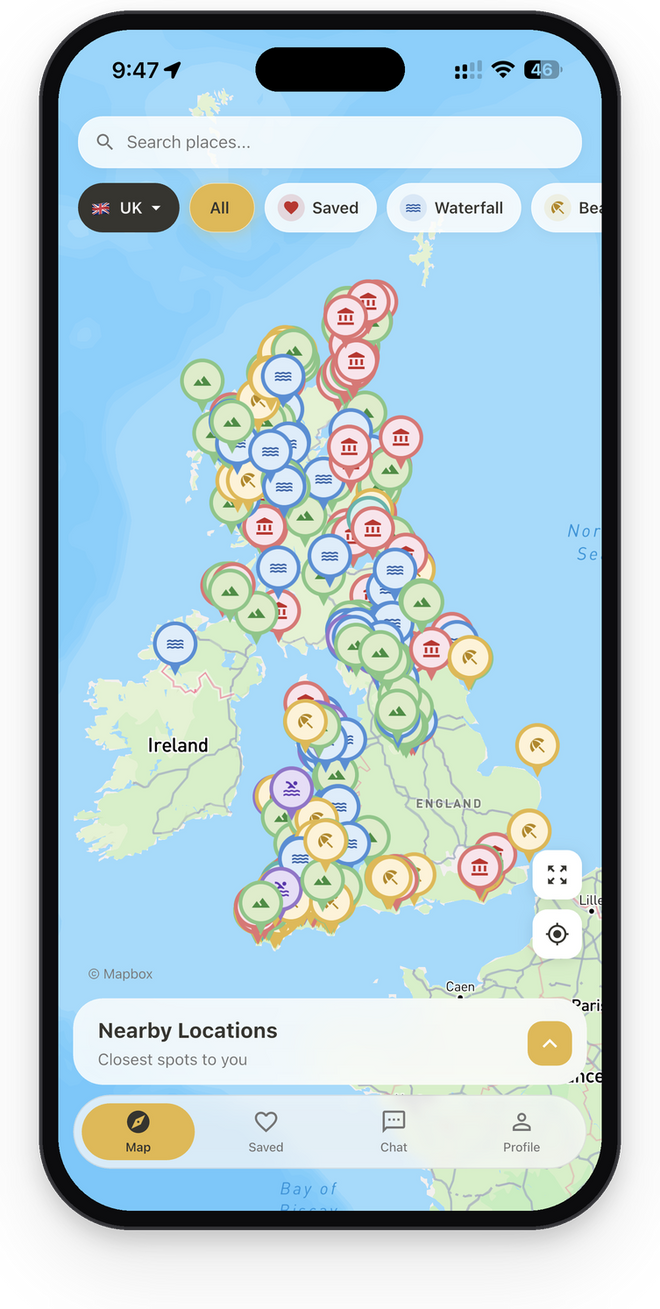
New boots need a first walk. Sole Drift maps 1,100+ spots across Australia, each with the walk distance, difficulty and good to know warnings.
Breaking in new hiking boots
Modern boots need far less breaking in than the old leather ones. Every pair still needs a trial. Tasmania Parks' walker pack list puts it plainly: hiking boots and socks, worn in before you leave, to minimise blisters.
- Wear them around the house for a few days
- Keep the box and receipt until you're sure
- Do a short local walk on easy ground
- Build up to a full day with your loaded pack
- Carry blister tape on the first few walks
- Re-lace and adjust as they soften
Heads up: never break in boots on a multi-day walk. A hot spot on day one of a long track is a raw blister by day three, and there's no shop at the next hut.
Caring for hiking boots in Australian conditions

Scrub the soil off between parks. This one's about the bush, not your boots. Phytophthora dieback is a root rot that moves in soil, and Tasmania's biosecurity agency says it can travel on your boots and gaiters. Use washdown stations at track starts wherever you see them. Between trips, brush and wash the soil off, and let boots dry fully before the next park. South Australia's bushwalking hygiene guidelines say the same: clean before you leave home and again after the walk.
Dry them slowly. In the shade, somewhere airy, insoles out, stuffed with newspaper. Not in the sun on the dashboard, not by the campfire. Heat dries out leather, weakens the glue and can warp the sole.
Wash out sand and salt. After coastal walks, rinse them in fresh water. Salt and sand grind away at stitching and mesh.
Reproof now and then. When water soaks in instead of beading, a fabric or leather proofer restores the outer. Check the maker's advice for which suits your pair.
Top tip: flying into Australia with used boots? The Department of Agriculture's returning travellers page says to make sure footwear used in rural areas is clean and dry, free of soil, seeds and grass, or declare it. Scrub the soles before you pack them.
When to replace hiking boots
There's no fixed kilometre count. Weight, terrain and heat all change how fast a pair wears. Look for the signs instead.
- Tread worn smooth, especially at the heel and toe
- Sole starting to peel or separate
- Midsole compressed, so your feet ache sooner
- Upper split, or stitching coming apart
- Membrane boots that now leak in shallow water
- New aches in your knees or hips on familiar walks
Some well made boots can be resoled by a specialist repairer if the uppers are still in good shape. Lighter trail shoes usually can't, and wear out faster.
If a pair fails early (a sole peeling off after a few walks, stitching splitting), take it back. Under Australian Consumer Law, the ACCC says a business must offer a repair, replacement or refund for a faulty product, and can't send you off to the manufacturer. Keep the receipt.

Before your first big walk
Boots are one part of the kit. Our guide to choosing a hiking backpack covers the other thing that decides how your body feels at the end of the day, and the hiking essentials checklist covers the rest of the bag. Heading to Britain? Our UK walking boots guide covers bog, scree and the B0 to B3 winter boot grades you won't need here.
Questions people ask
What are the best hiking boots for Australia?
The ones that fit your feet and suit your terrain. For hot, dry tracks that often means a breathable mid or trail shoe; for Tasmania, the high country or heavy packs, a waterproof boot with a stiffer sole.
Are waterproof hiking boots worth it in Australia?
In Tasmania, the alpine high country and cool, wet weather, yes. On summer walks inland or in the humid tropics, a breathable mesh shoe usually keeps your feet drier, because it lets sweat out and drains after creek crossings.
Should hiking boots be a size bigger?
Not always, but they need room for your toes on descents. With the boot unlaced and your foot pushed forward, about a finger's width behind your heel is the usual guide.
Can I hike in trail runners in Australia?
Plenty of walkers do on dry, formed tracks. They're light and cool, but give no ankle support, let sand and seeds in, and suit lighter loads more than heavy overnight packs.
Do I need to declare hiking boots when I arrive in Australia?
Footwear used in rural areas needs to be clean and dry, free of soil, seeds and grass, or declared. Clean them before you fly, and declare if you're unsure.
How do I stop blisters on a hot hike?
Wear boots that fit and are worn in, choose moisture wicking socks, and swap to a dry pair when your feet get damp. Cover hot spots with tape as soon as you feel them.
Fit first, terrain second
The best hiking boots are the ones you forget about by lunchtime. Get the fit right, buy for the ground you actually walk, and give them a good scrub between parks.
Stay on the track, clean your boots at every washdown station, and leave the bush as you found it.