


Most people buy a dry bag after the day something got wet. The phone in the kayak. The sleeping bag after a creek crossing. The wallet at the beach when the tide came in faster than expected.
A dry bag is about the simplest bit of gear you'll ever own: a waterproof sack with a closure on top. But the wrong size, the wrong closure or a lazy fold at the top and it leaks like a shopping bag.
This guide covers what size you need in litres, roll-top vs zip, what IPX ratings actually mean, which materials suit which trips, and how to pack one for kayaking, hiking, the beach, the 4WD and a Top End wet season. No product rankings (we don't test gear, and the best bag depends on what you're keeping dry).
The short version
- Size by job: 1 to 5 litres for a phone and keys, 10 to 20 for a day on the water, 20 to 35 for a sleeping bag or clothes.
- Roll-tops are the standard: fold the top down at least three times, then clip it.
- IPX7 means a test of 1 metre underwater for 30 minutes; IPX8 goes deeper, with the depth set by the maker.
- Heavy PVC survives rocks and roof racks, thin nylon saves weight inside a pack.
- Test a new bag at home with a paper towel inside before you trust it with a phone.
What size dry bag do you need?
Dry bags are sized in litres, the same as backpacks. The trick is to buy for what goes inside, with room left at the top to roll it closed. A bag stuffed to the brim can't fold down properly, and that's where the water gets in.
| Size | Good for | Typical trip |
|---|---|---|
| 1 to 5 L | Phone, keys, wallet, car key fob, first aid kit | Beach day, SUP, swim hole walk |
| 10 to 20 L | Spare layer, towel, lunch, camera | Day kayak, river float, day hike in rain |
| 20 to 35 L | Sleeping bag, spare clothes, down jacket | Overnight hike, hut walk, canoe camping |
| 40 L and up | Tent, cooking gear, a week of clothes | Multi-day kayak, 4WD trips, the wet season |
Treat those as a rough guide. A compact down sleeping bag might go in a 10 litre bag, while a bulky synthetic one needs 25 or more.

Several small bags usually beat one big one. Split things by what you'll need when: one for the sleeping bag, one for camp clothes, one small bag for the first aid kit and the stuff you grab often. If one leaks, you don't lose everything, and colour coding means you're not tipping out a whole pack to find the head torch.
Roll-top vs zip closure
Roll-top
- The standard closure on most dry bags
- Simple, cheap and easy to fix
- Size adjusts as you roll it down
- Only as good as your folding
- Slower to get into
Waterproof zip
- Airtight zip, like a drysuit
- Quick access, flat top
- Often found on duffels and backpacks
- Pricier, and the zip needs care
- Grit in the teeth can stop it sealing
For most people a roll-top is the answer. It's what most dry bags use, and there's not much to break. A waterproof zip makes sense on a bag you open constantly (a deck bag, a camera bag) and are prepared to look after.
Phone pouches are their own thing: usually a clear window with a press seal or slide clip, worn around your neck or clipped inside a PFD.
How to close a roll-top properly
This is where most leaks come from. The fold creates the seal, not the clip.
- Leave room. Stop filling a hand's width or more below the top.
- Push the air out. Squeeze the bag gently so it isn't a balloon (unless you want it to float).
- Straighten the top. Line up the stiff strip at the opening so it's flat and even.
- Roll tightly, at least three times. Fold down over the strip, not inwards.
- Clip it. Bring the buckle ends together, or clip it to the side for a handle.
Top tip: a bag with a purge valve lets you squeeze the air out after it's sealed. Dead handy for a sleeping bag, which then packs down much smaller in your backpack.
What do IPX ratings mean?
The IP code comes from the international standard IEC 60529. The first digit is protection against dust and solids, the second against water. An X means that part wasn't tested. So IPX7 is a water rating with no dust rating claimed.
1 mIPX7 test depth
30 minIPX7 test time
IPX8deeper, maker sets
The ones you'll see on dry gear, per the IP code summary of the standard:
| Rating | What it's tested for | Fine for |
|---|---|---|
| IPX4 | Splashing from any direction | Rain, spray, a wet tent floor |
| IPX6 | Powerful jets of water | Heavy rain, boat spray, hosing down |
| IPX7 | Immersion to 1 metre for 30 minutes | A capsize, dropping it in a creek |
| IPX8 | Immersion deeper than 1 metre, depth and time set by the maker | Long time in the water, check the maker's figure |
Two catches. Ratings aren't cumulative: an IPX7 test is an immersion test, and it doesn't prove the bag handles high pressure jets (that's IPX6). And IPX8 means nothing until you read the depth and time the maker actually tested to.
Plenty of good roll-top bags don't carry an IP rating at all. For them, it's about the fabric, the welded seams and how well you close it.
Heads up: no dry bag is meant to live underwater. Most are built for splashes, rain and a short dunking. If your phone has to survive a long swim, use a pouch with an IPX8 rating and read the depth and time on the label.
Materials: heavy, light and in between
- PVC or vinyl tarpaulin: heavy, stiff and tough. Survives rocks, roof racks and being dragged up a beach
- TPU coated nylon: lighter and more flexible, still tough enough for kayaking
- Siliconised nylon (ultralight): very light, best inside a backpack, not for rough handling
- Welded seams: stronger and more watertight than stitched and taped ones
You'll also see a number followed by D (for denier), like 70D or 500D. It's the thickness of the yarn. Higher usually means tougher and heavier. A 500D bag strapped to a kayak deck can take a beating. A 30D ultralight bag can't, but inside your pack it saves real weight.
The rule: the more the bag gets handled, dragged or strapped to things, the heavier the fabric should be. The more it lives inside something else, the lighter you can go.

Which dry bag for which trip
Kayaking, canoeing and SUP
This is where dry bags earn their keep. A capsize puts everything underwater at once.

Phones matter most. NSW's essential safety equipment page recommends keeping your mobile in a waterproof cover, and Tasmania's boating authority MAST tells paddlers to carry a mobile phone in a waterproof pouch. The NSW Paddle Safe brochure adds that canoes and kayaks must carry a waterproof torch if you go out between sunset and sunrise. A small dry bag keeps it, the phone and the car keys together.
- Phone in a pouch you can use through the window, kept on you
- A 5 to 10 L bag for keys, wallet and snacks
- A 10 to 20 L bag for a dry layer and towel
- Bags clipped to deck lines, not loose in the cockpit
A dry bag with air in it floats, which makes it easier to grab after a capsize. It doesn't make it a buoyancy aid. Wear the PFD.
Heads up: don't tie a dry bag to yourself in surf or moving water. A strap that catches on a snag or wraps round a limb is a far bigger problem than a lost bag. Clip it to the boat.
Hiking and overnight walks
Most backpacks are water resistant, not waterproof. For multi-day walks, the dry bag goes inside.
Tasmania Parks' Three Capes Track packing list asks walkers to use a waterproof backpack liner and, on top of that, put their sleeping bag and spare clothes in leak-proof plastic bags, also known as dry bags. That's sound advice for anywhere it can rain properly, from the alps to the Overland Track. A wet sleeping bag in cold weather is a safety problem, not a comfort one.
Light nylon bags win here, since weight matters and the pack protects them from rocks. Our hiking backpack guide covers liners vs rain covers and how to pack the rest around them.
Beach days and swim holes
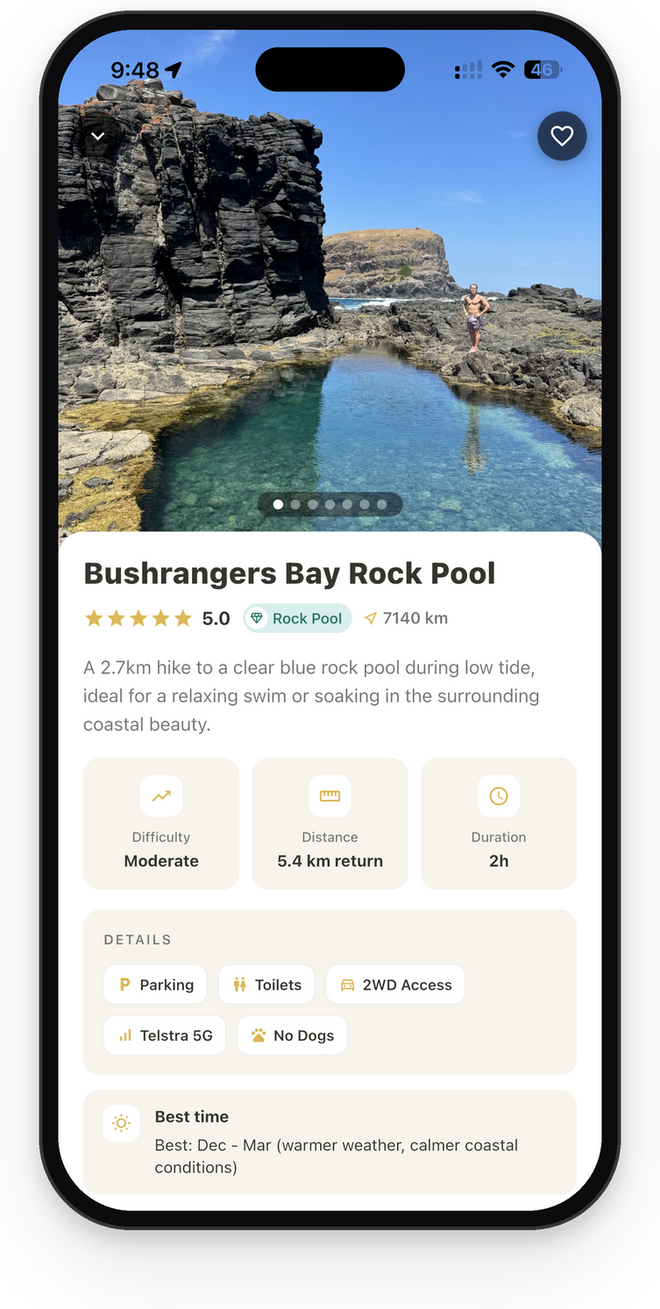
A small 3 to 5 litre bag solves the "who's watching the phone" problem at a swim hole or a beach cove. Car keys, phone, wallet, all sealed and easy to carry along a wet rock ledge or a short creek walk.
It won't stop theft, and sand in the roll strip stops it sealing. Shake the top out before you roll it.
Sole Drift app
Get the app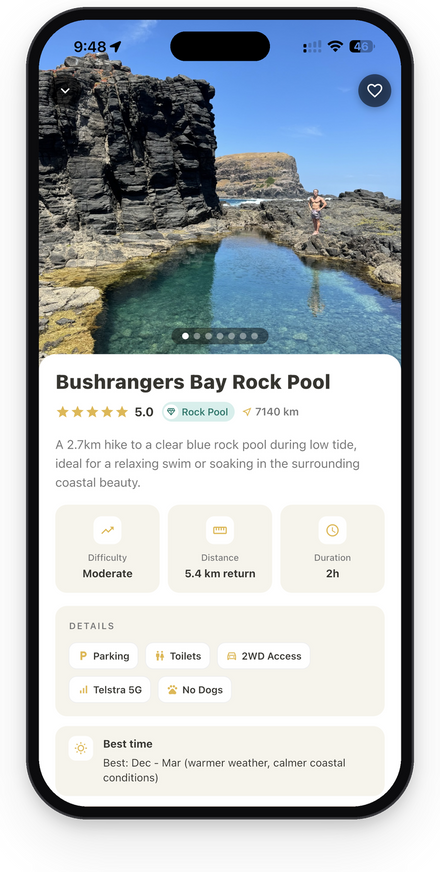
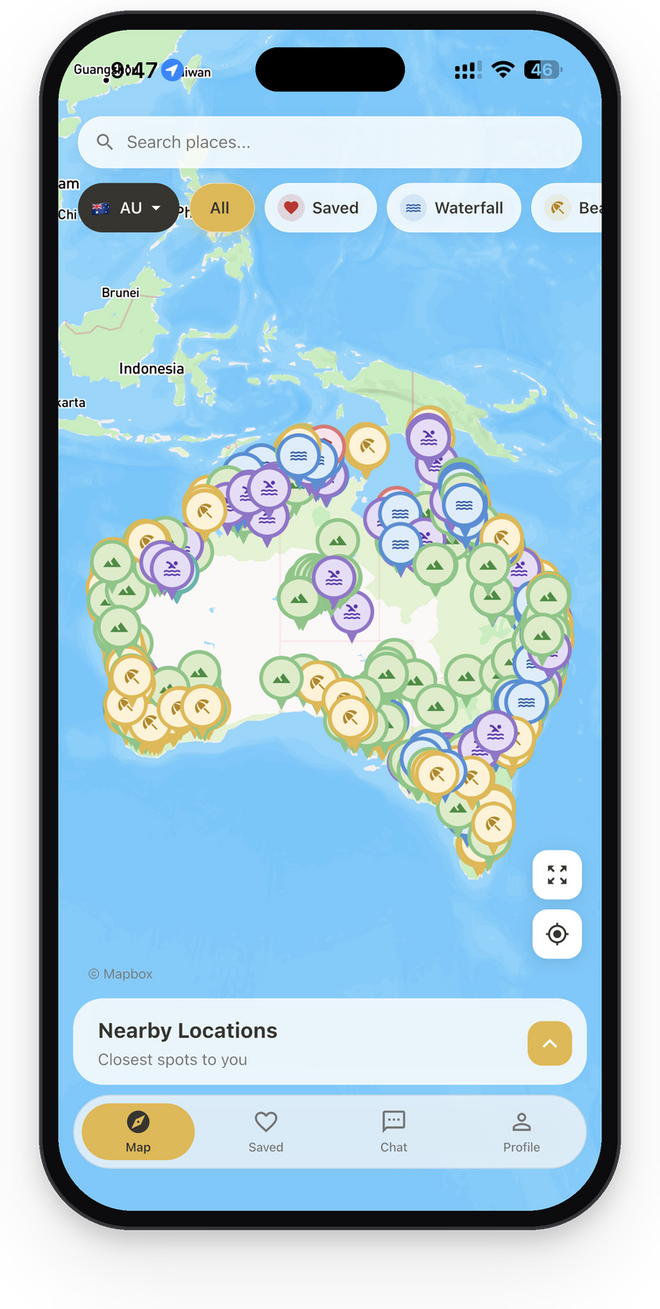
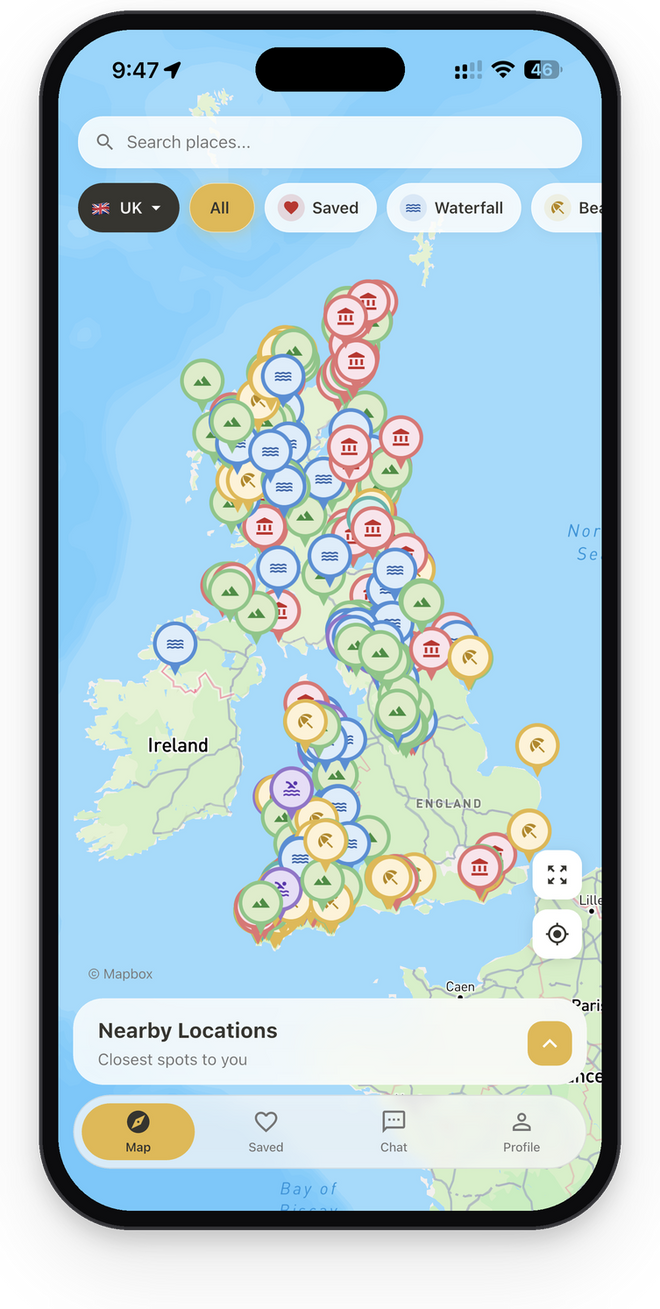
Sole Drift maps swim holes, rock pools and beach coves worth packing a dry bag for, with walk times, across 1,100+ spots in Australia.
4WD trips and touring
Dry bags aren't only for water. On corrugated dirt roads, bulldust finds its way into every gap of a car or trailer, and a sealed roll-top keeps it out of sleeping bags and clothes. Heavy PVC bags in the 40 litre plus range sit well on a roof rack or in a ute tray, and survive rubbing on metal.
Creek crossings are the other reason. Gear in the back of a ute or a low trailer can get wet even when the cab stays dry. If you're heading somewhere like K'gari, where sand, salt and water all get into everything, bag the stuff that matters.
The wet season in the tropics
From roughly November to April, the Top End and Far North Queensland get the storms that soak everything in minutes. Backpackers travelling through then live out of dry bags: passport and documents in a small one, electronics in another, clothes in a big one inside the main pack. Even a day trip to a waterfall can mean walking back in a downpour.
Our camping gear guide for beginners covers what else to sort before a wet trip.
Dry bag backpacks and duffels
A dry bag backpack is a big roll-top or zip bag with shoulder straps. Great for kayak camping, beach days and wet season travel, as the whole thing is sealed.
Good for
- Kayak and canoe trips
- Wet season travel
- Beach days and boat trips
- Carrying wet gear without soaking the car
Not great for
- Long walks with heavy loads
- Hot days, as the back doesn't breathe
- Quick access to small things
- Staying organised inside
For a proper hike, a normal pack with dry bags inside carries far better.
How to test and care for a dry bag
Before you trust a new bag with a phone, test it at home.
- Paper towel inside. Put a dry sheet of paper towel in the bag.
- Close it properly. Three tight rolls and clip.
- Dunk it. Hold it under in a sink or bath for a few minutes.
- Check the towel. Any damp patch shows where the leak is.
Then look after it:
- Rinse off salt and sand after the beach
- Dry it fully, inside out, before storing
- Store it out of the sun, as UV breaks down coatings
- Keep sharp things (tent pegs, knives) wrapped
- Patch small holes with a repair patch for that fabric
A bag that develops a fault it shouldn't have, like a seam that splits early, is covered by the consumer guarantees under Australian Consumer Law. The ACCC explains when you can ask for a repair, replacement or refund.

Questions people ask
What size dry bag do I need?
It depends on what goes in. Roughly 1 to 5 litres for a phone and keys, 10 to 20 litres for a day on the water, and 20 to 35 litres for a sleeping bag or clothes.
Are dry bags fully waterproof?
Most handle rain, splashes and a short dunking when closed properly. They aren't built to stay underwater for long, so check the IP rating if that matters.
What is the difference between IPX7 and IPX8?
IPX7 is tested at 1 metre underwater for 30 minutes. IPX8 is tested deeper than 1 metre, with the depth and time set by the maker.
How many times should you roll a dry bag?
At least three times, folded tightly over the stiff strip at the top, then clipped. Leave enough space at the top to do it.
Do dry bags float?
Usually, if there's air sealed inside. That helps you grab one after a capsize, but it isn't a buoyancy aid.
Do I need a dry bag for kayaking?
It's the easiest way to keep your phone and keys dry. NSW and Tasmanian boating authorities both recommend carrying your phone in a waterproof cover or pouch.
Keep the important stuff dry
Buy smaller bags than you think, roll them properly and test them before the trip. Your phone, sleeping bag and car keys will thank you.
Check the conditions before you paddle, carry your phone in a waterproof pouch, and take every bag and wrapper home with you.