


Everyone's got a mate who "just pulled up by the river" and camped for free. Then there's the other mate who got a knock on the van at 6 am and a fine.
The difference is usually whose land they were on.
NSW has plenty of legal free camping, and a lot of it is excellent. You just need to know how the rules work, because they change depending on who runs the land. Here's the guide as of October 2026.
The short version
- NSW state forests are free to camp in, with no booking and a four week limit.
- Free national park campgrounds still need an online booking, usually with a small fee.
- Council rest areas have their own rules, so check before you stop.
- On a Total Fire Ban day, no fire may be lit in the open.
- Sleeping in a car on the side of a town street isn't automatically legal.
$0state forest camping
4 weeksstate forest limit
$6typical booking fee
Is free camping legal in NSW?
Yes, in the right places. The real question is who manages the land under your tent.
| Land | Cost | Booking | Worth knowing |
|---|---|---|---|
| State forest | Free | No, first come | Dogs welcome, usually few facilities |
| National park | Often free or paid | Yes, online | Dogs generally not allowed |
| Council rest area | Varies | Varies | Rules differ by council |
| Private land | By arrangement | Ask first | You need the owner's permission |
State forests: the best free camping in NSW
This is the easy one. Forestry Corporation of NSW says plainly that state forests are free to camp in.
You can pitch a tent almost anywhere, except on roads, in picnic or permit areas, in pine plantations or in closed forest. Sites can't be booked, so it's first come, first served, and the maximum stay is four weeks.
Dogs are welcome too, as long as they're under control. That makes state forests a great option if you're travelling with one, because most national parks won't have them. Service NSW notes the exceptions: camping is allowed in all state forests except Cumberland and Strickland.
Heads up: many forests have no rubbish facilities, so take everything home. Campfires are banned in some forests in the warmer months, so carry a gas cooker. These are working forests too, so watch for log trucks, and check Forestry Corporation's site for closures before you go.
National parks: free doesn't mean no booking
This is where most people slip up. Plenty of NSW national park campgrounds have no camping fee, but you still need to book, and you'll usually pay a small booking fee.
Wheeny Creek campground is a good example, with no camping fee and a $6 booking fee as of October 2026. On paid sites, a booking fee applies on top.
Some parks also charge vehicle entry, and that's separate. The NPWS booking terms say your booking doesn't include entry fees, and that the booking fee isn't refunded if you cancel.
Do
- Book online before you drive in.
- Check alerts for the park.
- Use the fireplaces provided.
- Bring your own water if the site has none.
Don't
- Assume a free site means walk-in.
- Bring the dog without checking.
- Collect firewood from the park.
- Camp outside marked areas.
Council rest areas and towns
Some towns welcome campers, and some don't. Many regional councils provide free or low-cost stops to bring travellers into town, while coastal councils often ban overnight stays in car parks and beachside streets, because that's where the problems have been.
There's no single NSW rule here, so look for signs and check the council's website. If a sign says no camping, it means you, even if there are three other vans there.
Top tip: if a town gives you a free stop, spend some money there. Fuel, groceries or a coffee helps keep those sites open for the next person.
Sole Drift app
Get the app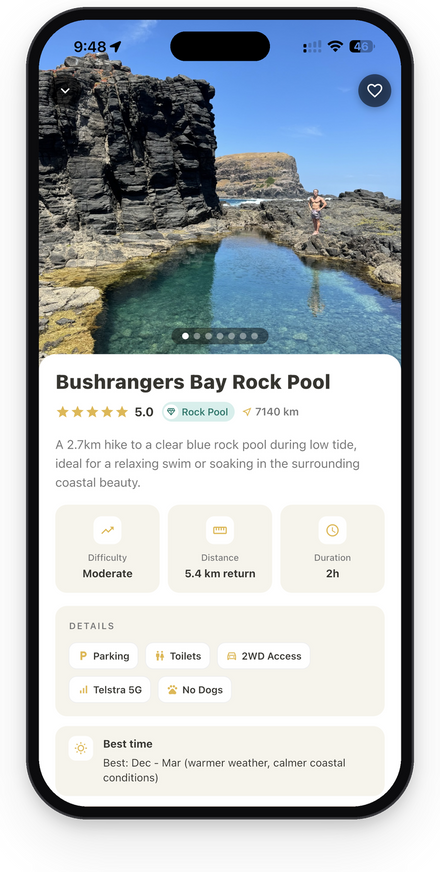
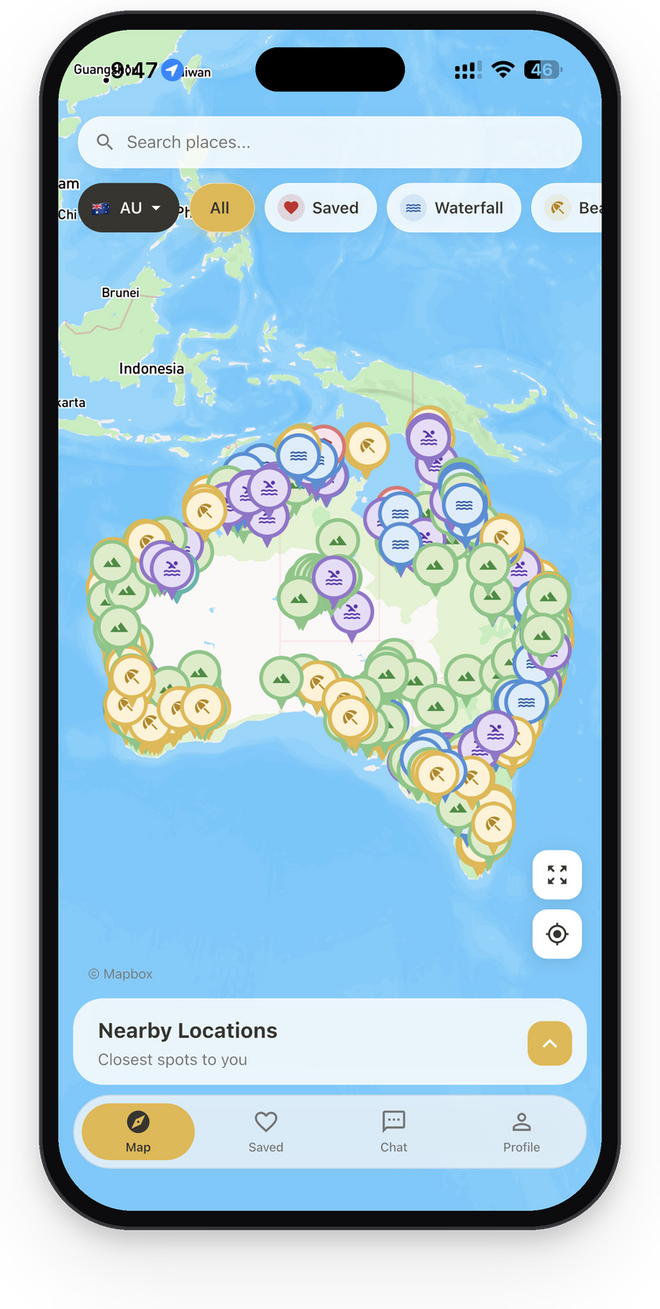
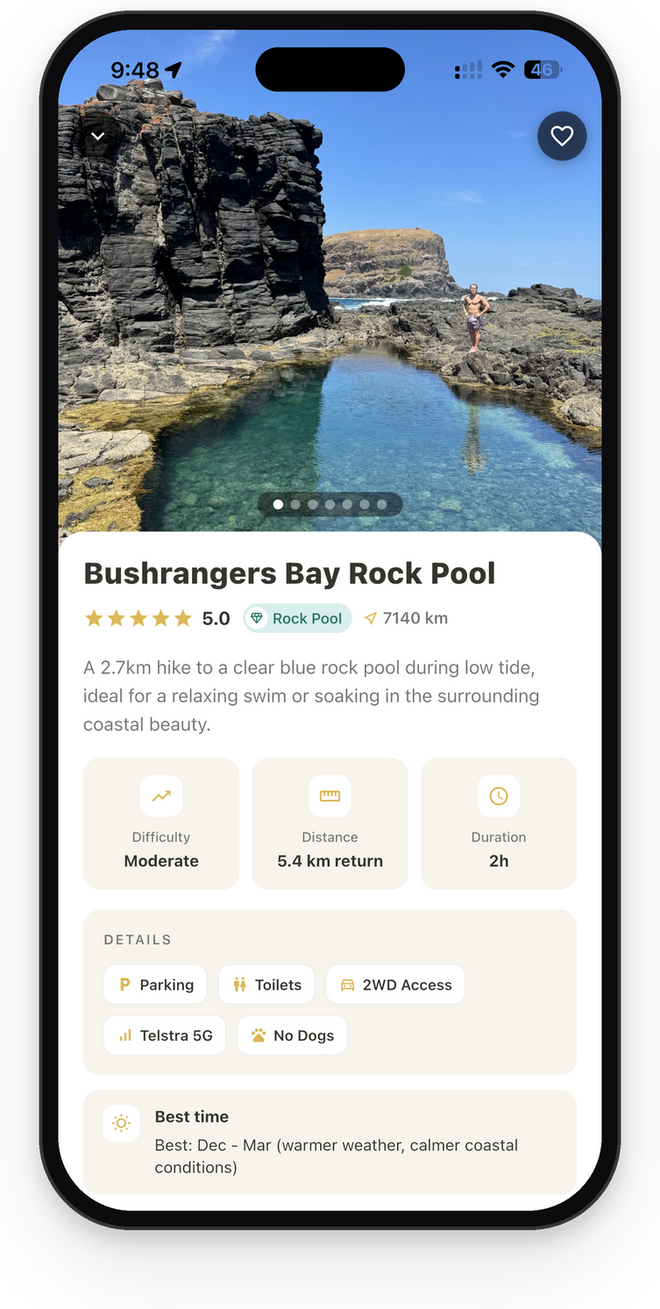
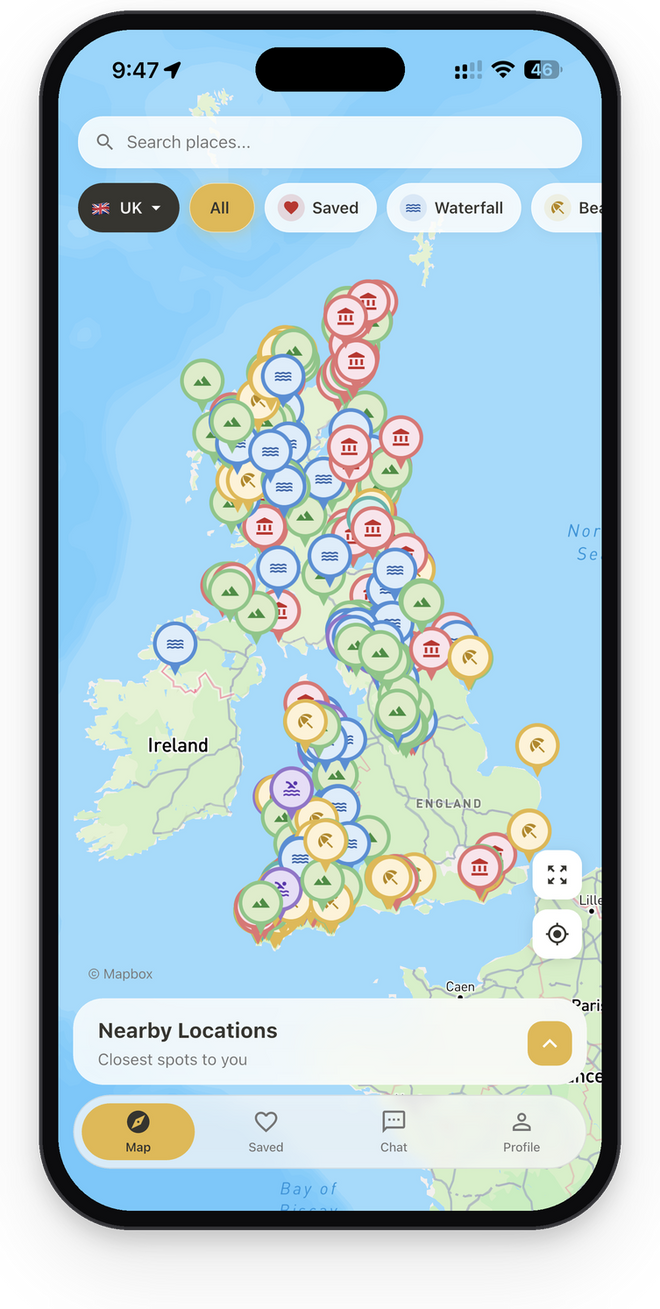
Found your NSW camp? Sole Drift shows waterfalls and swims nearby, with the walk for each, from 1,100+ spots across Australia.
How to find a free campsite

- Start with the map. Look for state forests along your route. They're often closer than you'd think.
- Check the official site. Look up the forest or park for closures and fire restrictions.
- Look at your water. Many free sites have none, so fill up in the last town.
- Arrive early. First come, first served works best before mid afternoon.
- Have a plan B. Know your backup before it gets dark.
Phone signal drops out quickly in forests, so save your route and download offline maps before you lose it. Forestry Corporation also suggests the Hazards Near Me app for fire updates, while you still have signal.
Fire rules you can't ignore

This is the bit that can cost you, or someone else, a lot more than a campsite fee.
On a Total Fire Ban day, no fire may be lit in the open. That includes campfires, and also solid or liquid fuel barbecues and stoves. The NSW RFS lists an on-the-spot fine of $2,200 for lighting a fire on a Total Fire Ban day. Bans usually run from midnight for 24 hours, and they're generally announced the afternoon before.
NPWS fire bans can apply to parks at other times too, so check them separately.
Heads up: if a bushfire threatens where you are, leave early. Don't wait to see what happens. In a forest with one road in, the time to go is well before you can see smoke.
Toilets, water and leaving no trace

Free camping stays free because people treat it well. It disappears when they don't.
- Carry out all your rubbish, including food scraps
- Use toilets where they're provided
- Bury toilet waste well away from water if there's none
- Keep soap and dishwater out of creeks
- Stay away from riverbanks when you pitch
- Leave firewood where it falls in national parks
Read our Leave No Trace guide before your first trip, and grab our camping checklist for Australia so you're not caught without water. Our guide to the best national parks in NSW has more ideas for where to head, and you can stay safe with our outdoor safety tips.
Happy to pay for a good site? See the best camping in NSW.
Sorting the food? Here's our guide to camp cooking, and what to check before hiring a campervan.
Crossing the border? See free camping in Victoria.
Heading north? See free camping in Queensland, and our guide to camping with dogs if your dog's coming.
Happy to pay for a site by the sand? See our guide to beach camping in NSW.
Crossing Bass Strait? See free camping in Tasmania.
Questions people ask
Can you camp anywhere for free in NSW?
No. You can camp in most state forests for free, but national parks, council land and private land have their own rules.
Do I need to book free camping in NSW national parks?
Yes. Campgrounds are booked online, and free sites usually carry a small booking fee.
Can I take my dog free camping in NSW?
Yes in state forests, as long as your dog is under control. Dogs generally aren't allowed in national parks.
Can you light a fire when free camping?
Only when it's allowed. Check fire restrictions, and never on a Total Fire Ban day.
Know whose land you're on
Get that one thing right and NSW opens right up. Check the rules, carry your water and clear out before someone has to ask you to.
Take everything with you, keep fires legal and leave each camp better than you found it. That's how free camping stays free.