


Every summer it's the same story. Someone decides they'll go beach camping on the NSW coast in January, opens the booking page in December, and finds Depot Beach and Pebbly Beach full since the middle of winter.
The coast has far more beachside campgrounds than the famous two, though. Some have hot showers and a kiosk. Some have a drop toilet, no water and no phone signal. All of them put the sand a short walk from your tent.
Here are 8 of the best, from the far South Coast to the Northern Rivers, with what each one has, who it suits and the rules that catch people out. Fees and conditions change, so we've dated them, and you should check each campground's page before you go.
The short version
- Book NSW national park campgrounds online, and book school holidays months ahead.
- Park entry at the NPWS parks here is $8 per vehicle per day on top of camping, as of November 2026.
- Dogs aren't allowed in national parks; Seven Mile Beach Holiday Park at Gerroa has dog friendly sites.
- Check the total fire ban status every day from October to March.
- Most of these beaches are unpatrolled, so swim at a patrolled beach when you can.
| Campground | Park or area | Sites | Best for |
|---|---|---|---|
| Saltwater Creek | Beowa NP, far South Coast | 15 | Quiet, no signal |
| Pretty Beach | Murramarang NP, South Coast | 55 | Kangaroos, families |
| Green Patch | Booderee NP, Jervis Bay | Not stated | Calm water, snorkelling |
| Seven Mile Beach Holiday Park | Gerroa, South Coast | Holiday park | Dogs, kids, comfort |
| Yagon | Myall Lakes NP, Seal Rocks | 33 | Surf |
| Diamond Head | Crowdy Bay NP, Mid North Coast | 75 | Kangaroos, walks |
| Illaroo | Yuraygir NP, North Coast | 70 | Space, fishing |
| Woody Head | Bundjalung NP, Northern Rivers | 91 | Families, calm swimming |
Already booked into Depot Beach, Pebbly Beach or Bittangabee? They're in our guide to the best camping in NSW, so we've left them out here and gone for different ones.
1Saltwater CreekBeowa National Park
The spotFifteen sites behind a creek mouth and an empty beach, south of Eden, with no phone signal at all.

This is the one for people who want to switch off. Saltwater Creek sits in the Green Cape area of Beowa National Park (the park that used to be called Ben Boyd), down a run of unsealed roads that are fine for a 2WD but slippery after rain.
There are toilets, barbecues and picnic tables, and that's about it. Bring your own drinking water, cooking water and firewood. NPWS lists possums, bandicoots, red-necked wallabies, goannas, pythons and lyrebirds around camp, and asks that nobody feeds them. Stays are capped at two weeks.
Heads up: NPWS says Saltwater Beach is unpatrolled, with dangerous rips, sudden drop-offs and unexpected large waves. NPWS also notes there's no mobile coverage at the campground, so tell someone your plans before you drive in.
2Pretty BeachMurramarang National Park
The spotA South Coast campground where the kangaroos graze between the tents all year round.

Pebbly Beach gets the famous kangaroo photos, but Pretty Beach, a few minutes south near Kioloa, has the roos too. NPWS says they graze the open spaces year round, along with lyrebirds, possums, gliders and goannas.
It's the comfortable end of national park camping: 55 sites for tents, camper trailers and caravans, powered and unpowered, with hot showers, a laundry and sheltered electric barbecues. There are also two cabins if someone in your group won't do a tent. The tank water needs boiling or treating before you drink it.
Top tip: park entry here is paid by card only, so don't rock up counting on cash. Check in at the on-site office, and if it's unattended, look for your site on the whiteboard.
Don't feed the kangaroos, however much the kids beg. Human food makes them sick and teaches them to raid tents.
3Green PatchBooderee National Park
The spotA camp behind a sheltered Jervis Bay beach, with hot showers and some of the calmest water on the coast.

Green Patch is in Booderee, which is a Commonwealth national park, not an NSW one. That means a different booking system and different fees. Your NSW annual pass doesn't work here.
The Green Patch campground has fresh water, toilets, hot showers and sheltered barbecues, with standard and large sites, drive-in or walk-in. No open fires: fires only go in the fire pits provided, and Booderee suggests bringing your own gas barbecue because the shared ones get busy.
As of November 2026, the Booderee fee table for Green Patch is $35 a night for a standard site off-peak, $70 in the shoulder and $100 in peak, with park use fees included. Large sites (up to 10 people) cost more. Peak covers NSW school holidays, Easter and Friday and Saturday nights from October to April.
Where Green Patch Beach, Booderee National Park, Jervis Bay Territory
Difficulty Easy
Distance 0.8 km return
Duration 20m
ParkingToilets2WD accessTelstra 5GNo dogs
Best time December to February, for warm weather and calm water
Entry Booderee park pass, included in camping fees
Official info Booderee National Park
Exact location In the Sole Drift app
Heads up: Booderee's planning page says summer school holiday sites are allocated by ballot and every camping area fills well before Christmas. No animals can be brought into the park, so the dog stays home. Ring the Booderee Visitor Centre to check how the ballot works this year.
Sole Drift app
Get the app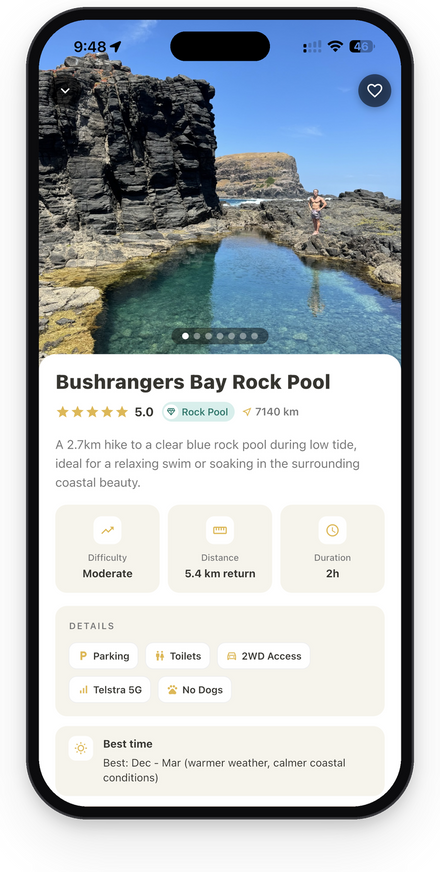
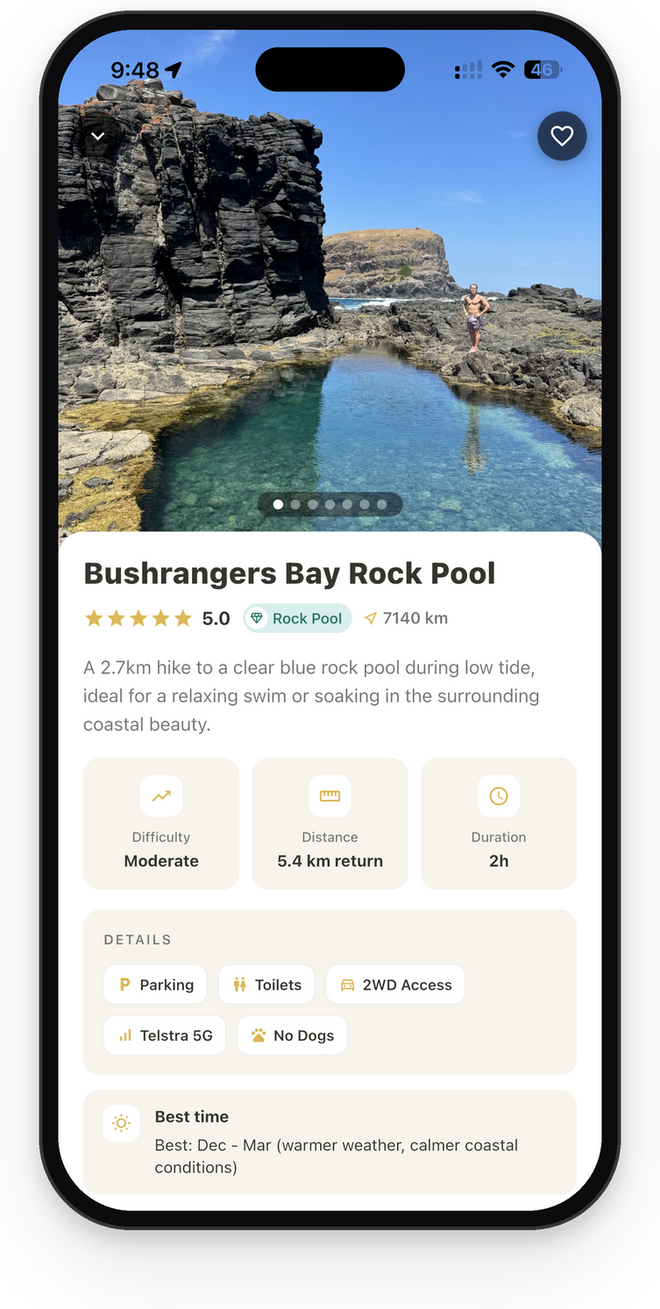
Camping on the NSW coast? Sole Drift shows rock pools, coves and lookouts near your campground, with exact locations, from 1,100+ spots across Australia.
4Seven Mile Beach Holiday ParkGerroa
The spotA council holiday park between Seven Mile Beach and Crooked River, and the only pick here where the dog can come.
National parks are off limits to dogs. NSW National Parks says dogs and other pets aren't permitted in most of its parks and reserves. So if the dog is part of the trip, you need a holiday park, and Seven Mile Beach Holiday Park at Gerroa is a good one. It's run by Kiama Municipal Council, backs onto Seven Mile Beach National Park, and lists dog friendly sites. Check the conditions on those when you book.
It's camping with the edges taken off: beachside powered sites about a minute from the water, riverside powered and unpowered sites, ensuite sites, two pools, a camp kitchen and a playground. It's also a natural overnight stop on the Grand Pacific Drive.
Our guide to camping with dogs in Australia covers the other options, from State forests to the rules that catch dog owners out.
5YagonMyall Lakes National Park
The spotA basic camp behind the dunes at Seal Rocks, a short walk from some of the best surf on the Mid North Coast.
Yagon is at the end of the road past the Seal Rocks shop, with 33 marked sites for tents, camper trailers and caravans. You get toilets, barbecues and picnic tables. No showers and no water, so bring both drinking and cooking water.
It suits surfers and anyone who'd rather wake up to the swell than a kiosk. The Sugarloaf Point Lighthouse is close by, and the rocks off Seal Rocks are a good spot for watching seals.
Top tip: this is a small campground in a tiny village, and it fills on summer weekends. If Yagon's full, Mungo Brush on the lakes side of Myall Lakes is in our best camping in NSW list.
6Diamond HeadCrowdy Bay National Park
The spotA big, grassy beachfront camp under a headland, with kangaroos around the vans.
Diamond Head has 75 sites, some walk-in, with toilets, showers, barbecues and picnic shelters. All sites are unpowered, and you'll want your own drinking water. Check in at the on-site office when you arrive.
Fires are allowed only in off-the-ground braziers, which you can hire from the office. For surf, NPWS points to Dunbogan Beach nearby.
7IllarooYuraygir National Park
The spotSeventy sites spread along a long, empty North Coast beach near Minnie Water.
Illaroo is about 15 minutes from Wooli and an hour from Grafton. It has toilets, drinking water and barbecues, but no showers or power. Firewood is sold at the campground or in Minnie Water.
It's split into a northern and a southern section, and NPWS warns a creek between them can cut them off in heavy rain. Worth knowing if a storm's forecast and your car's on the other side. The Rocky Point walk has spots for whale watching, and the Wooli Wooli River is good for birds and paddling.
Heads up: NPWS says Illaroo-Sandon Beach is unpatrolled, with rips, sudden drop-offs and unexpected large waves. The closest patrolled beach is at Minnie Water.
8Woody HeadBundjalung National Park
The spotA big family campground on a protected beach, with a kiosk, a boat ramp and rock platforms to explore.

Woody Head near Iluka is the most set-up campground on this list: 91 unpowered sites with toilets, showers, drinking water, a cafe and kiosk, and a boat ramp. NPWS describes the beach as protected and good for swimming and fishing, with a rock platform and shallow reefs.
Quiet hours run from 10 pm to 7 am, pets aren't allowed, and you can't collect firewood, rocks or plants, so buy wood at the kiosk. NPWS says plainly to book with plenty of time.
How to book a beach campsite for summer
Summer school holidays and long weekends are when every campground on this list fills. Here's how to give yourself a chance.

- Pick two or three campgrounds. Have a backup in a different park, because the famous ones go first.
- Book as soon as the window opens. NSW national park campgrounds are booked online through NSW National Parks, and each campground's page shows how far ahead you can book. Booderee and council holiday parks have their own systems.
- Go midweek if you can. Sunday to Thursday nights are easier to get and, at Booderee, cheaper.
- Keep checking. Cancellations come back into the system, so a full campground isn't always full the week before.
- Check alerts the day before. Parks can close for poor weather or fire danger, so look at the NPWS alerts page before you leave.
As of November 2026, the NPWS booking terms give a 75% refund if you cancel 31 days or more before arrival, and 50% if you cancel later. Booking fees aren't refunded. Don't book four campgrounds "just in case" and hold them: someone else wanted that site.
What it costs, as of November 2026
At the NPWS parks in this guide (Beowa's Green Cape area, Murramarang, Myall Lakes, Crowdy Bay, Yuraygir and Bundjalung), park entry is $8 per vehicle per day, and it's charged on top of the camping fee. The NPWS annual pass conditions say a pass covers entry but not camping, so you'll still pay for your site. NPWS camping fees show in the booking system when you pick your dates, and they vary by campground and season.
Booderee is different: the park pass is built into the camping fee. Seven Mile Beach Holiday Park sets its own rates.
Beach driving rules in NSW
None of these campgrounds needs a 4WD. But plenty of people bring one hoping to drive on the sand, and in NSW that's never a free-for-all.
Beach driving is managed beach by beach. Some beaches are run by councils with their own permits, and some are in national parks or conservation areas with separate NPWS permits. Stockton Beach at Port Stephens, for example, needs a Worimi Conservation Lands access permit, and NPWS says its annual passes don't cover beach permits. If there's no sign and no permit system, assume you can't drive there.
- Get the right permit for that exact beach before you go
- Drive on the harder sand below the high tide mark, around low tide
- Drop your tyre pressure for sand and pump back up before the road
- Give way to people on foot and keep well clear of swimmers
- Stay off the dunes and away from nesting shorebirds
- Carry recovery gear, and don't tackle an unfamiliar beach alone
Check the Bureau of Meteorology tide tables for the nearest port before you head out, and plan to be off the sand well before high tide.
Fires and total fire bans
The bushfire danger period in NSW runs from October to March, which is exactly when everyone goes beach camping. During that time the NSW Rural Fire Service can declare a total fire ban, usually around 5 pm, which applies from midnight for the whole of the next day.
According to NPWS fire ban rules, during a total fire ban:
Usually allowed
- NPWS gas barbecues, supervised, with water ready and nothing flammable within 2 m
- Gas or electric cookers inside a caravan or a three-sided annexe
Banned
- Campfires, even in fire rings or braziers
- Wood and other solid fuel barbecues and stoves
- Liquid fuel stoves
- Your own gas barbecue in the open, unless the park office says yes
NPWS can also declare its own park fire bans when the risk is high. Check the RFS fire bans page every morning you're camping, not just the day you leave home. Our camping checklist for Australia has the gas stove and cooking kit that keeps you fed on a ban day.
Tides, rips and swimming
Most beaches next to national park campgrounds are unpatrolled. NPWS says it at Saltwater Creek and Illaroo, and it's true of most of the coast between the towns. The safest place to swim is between the red and yellow flags at a patrolled beach.

Heads up: rips are the biggest danger on NSW beaches. Look for darker, calmer gaps between breaking waves, as that's often where a rip is running. If you're caught in one, stay calm, float and signal for help, or swim parallel to the beach. Check Beachsafe for each beach's hazards and the nearest patrolled spot.
Calmer bays like Green Patch on Jervis Bay and the protected beach at Woody Head are the better picks for younger kids. Even there, watch the water and the tide.
Wildlife at camp
Kangaroos at Pretty Beach and Diamond Head, wallabies and lyrebirds at Saltwater Creek, goannas almost everywhere. It's half the reason to go.
The rules are short. Don't feed anything. Lock food and rubbish in your car or a sealed box at night, because possums and goannas will open an esky or a bin bag. Keep your distance from kangaroos, especially big males and mothers with joeys, and never stand between a kangaroo and its escape route.
Questions people ask
Can you camp on the beach in NSW?
Yes, at designated campgrounds. In national parks you camp in the campground, not on the sand, but many sit right behind the dunes, a short walk from the water.
Do you need to book beach camping in NSW national parks?
Yes. NSW national park campgrounds are booked online through NSW National Parks, and summer and school holidays fill months ahead.
Can I take my dog beach camping in NSW?
Not in national parks, where dogs aren't permitted. Some holiday parks, like Seven Mile Beach Holiday Park at Gerroa, have dog friendly sites.
Can you have a campfire at NSW beach campgrounds?
Sometimes. It depends on the campground (Diamond Head allows fires only in off-the-ground braziers) and on fire bans, which can stop all wood fires from October to March.
What is the best beach campground for families in NSW?
Woody Head and Pretty Beach are good picks. Both have showers and kangaroos or rock platforms to explore, and Green Patch on Jervis Bay has calm water.
Doing it on the cheap? Our guide to free camping in NSW covers State forests and the rules for free sites.
Book early, swim between the flags
The sand's the easy part. The hard part's getting the booking, so get it done before winter's out.
Leave no trace: take every scrap of rubbish home, keep fires in the right place on the right day, and let the wildlife stay wild.