


Everyone compares the daily rate. Then they get to the counter and find out what the excess is, or get home to a bill for a chip in the windscreen.
Hiring a campervan is one of the best ways to see Australia. But the price on the booking page isn't the whole price, and the rules in the contract decide where you can actually go.
Here's which van to get, what to check before you pay, and what catches people out, as of November 2026.
The short version
- Compare the full price with insurance, not the daily rate.
- Read the contract on unsealed roads before you plan your route.
- Check if your travel insurance or credit card covers the excess.
- Photograph the whole van at pick-up and drop-off.
- Plan where you'll sleep, because you can't park up just anywhere.
Which campervan do you need?
Most people book too big or too small. Think about how you'll spend your days, and how many hours you'll be sitting inside if it rains.
| Type | Best for | The catch |
|---|---|---|
| Small station wagon or people mover conversion | Two people on a budget | You cook outside, and rain days are long |
| Hi-top campervan | Couples who want to stand up | Bigger to park, thirstier on fuel |
| Motorhome with a toilet and shower | Families, longer trips | Harder on narrow roads and in town |
| 4WD camper | Remote tracks | Costs more, and you still need to read the contract |
The catch: unsealed roads

This is the one that wrecks plans. A Victorian consumer review of rental agreements found some say the vehicle can only be driven on sealed roads, and all of them appeared to ban off-road use.
So that dirt road to the waterfall might be outside your cover, even if it's a perfectly good road. Check this before you pick a route, because plenty of the best spots in Australia sit at the end of a gravel track.
Heads up: a 2WD van won't get you everywhere, whatever the contract says. Main Roads WA says caravans, motorhomes and some camper trailers aren't recommended on the unsealed Gibb River Road, and K'gari's sand tracks suit high clearance 4WDs with low range only.
Sole Drift app
Get the app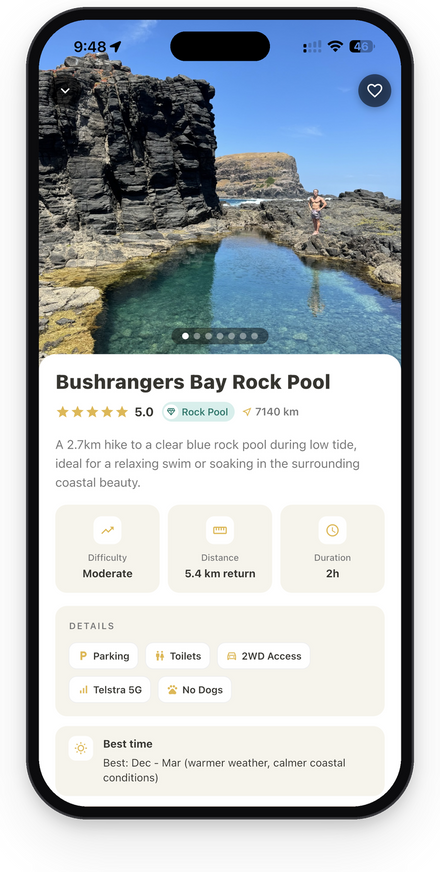
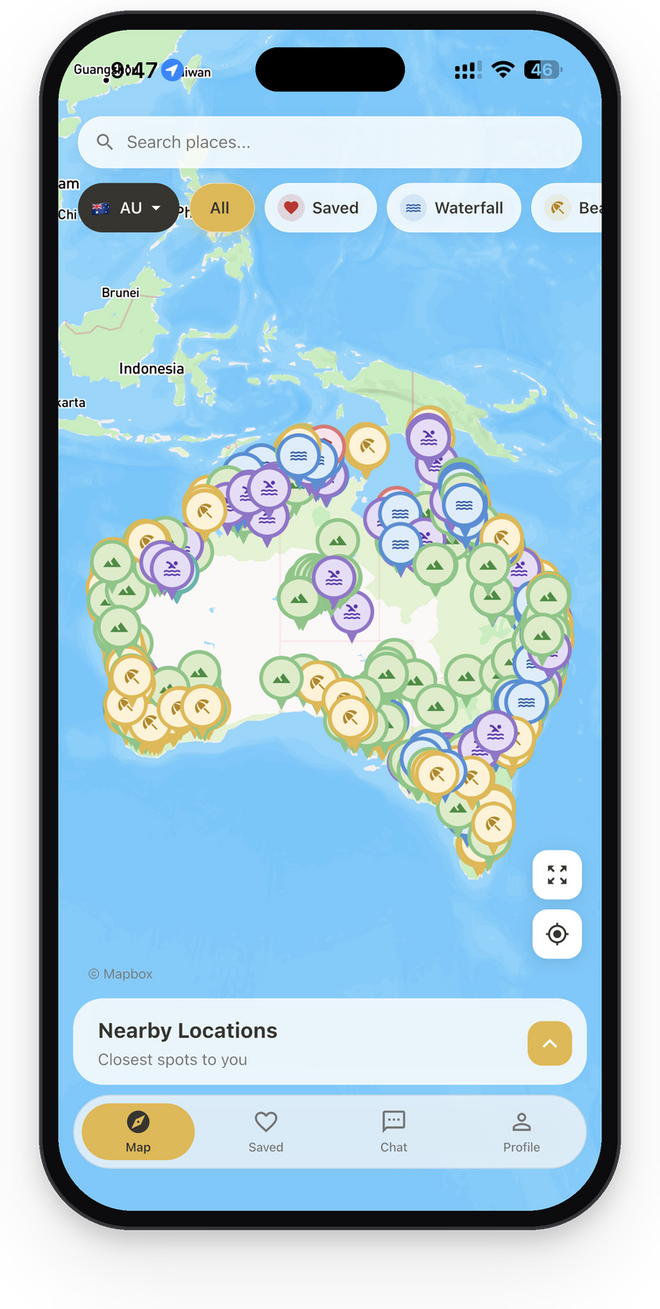
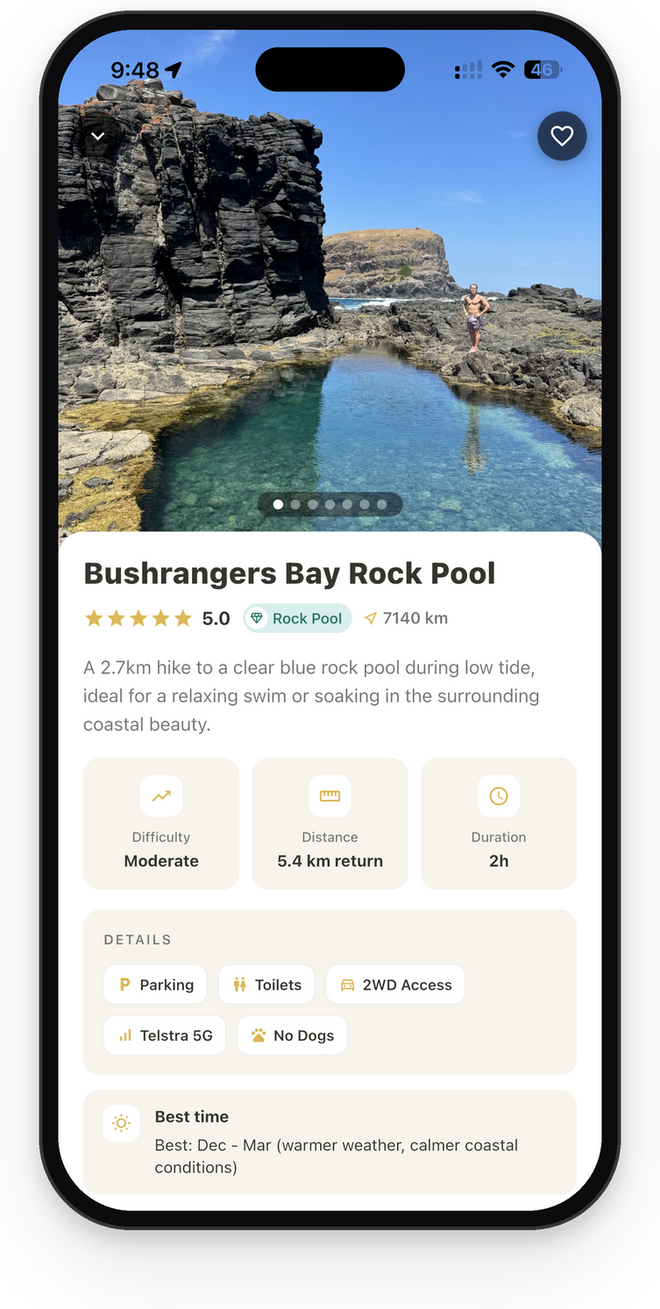
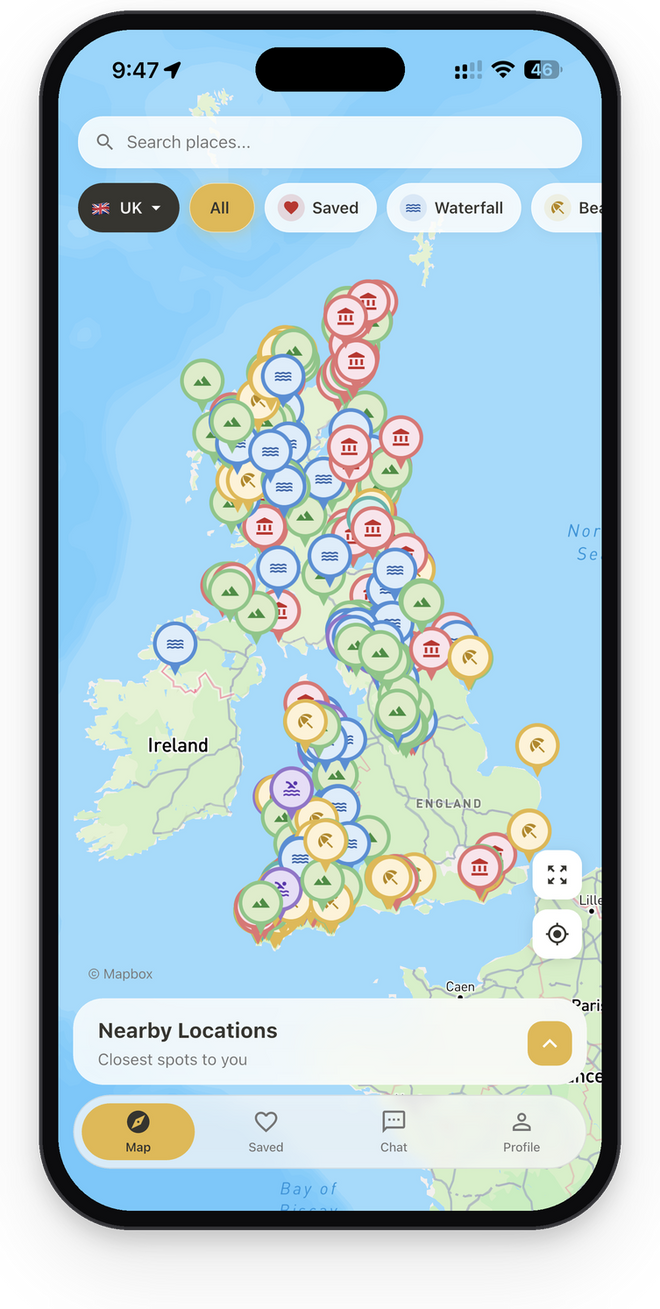
In a campervan? Sole Drift shows parking and 2WD or 4WD access for 1,100+ spots across Australia, so you know before you turn off.
Insurance and the excess
The excess is what you pay if something goes wrong, and hire companies will usually sell you a product that lowers it. Before you say yes, do two things.
First, read what's left out. The ACCC says your contract will usually spell out damage you aren't covered for, or have to pay extra to cover. Ask directly about roofs, windscreens, tyres, underbody damage and animal strikes.
Second, check what you've already got. The WA Commissioner for Consumer Protection suggests asking your own insurer or travel insurer first. You might be able to pay the excess to the hire company, then claim it back.
How to book and pick up
- Compare the real total. Add insurance, one-way fees, extra drivers, bedding and kitchen kits.
- Read the contract. Look for road limits, geographic limits, age limits and who can drive.
- Check your licence. Confirm with the company that your licence works, and whether you need a translation.
- Inspect the van. The ACCC says to go over the inside and outside with staff and photograph existing damage.
- Learn the systems. Get shown the gas, water, power and fridge before you drive away.
- Return it properly. Take photos again, keep your paperwork and ask for an itemised bill for any charge.
Top tip: film a slow walk around the van at pick-up, including the roof if you can see it and the windscreen. If anyone disputes a mark later, you've got a timestamp.
The ACCC also says damage shouldn't come off your card until the company gives you an itemised bill and a reasonable chance to dispute it. Worth remembering if an unexpected charge turns up.
Where can you sleep?

Having a bed on wheels doesn't mean you can park anywhere. Rules change by state and by council, and fines are real.
Good options
- Caravan parks with power and showers
- National park campgrounds, booked ahead
- Council free camps and rest areas where signed
Avoid
- Beach car parks with no camping signs
- Residential streets
- Anywhere you'd need to dump waste
Our guides to free camping in NSW and the best camping in NSW go through how it works. Fill water and empty waste at proper stations, and take everything with you.
Hire or buy?
For a few weeks, hire. For a few months or more, it's worth running the numbers on buying, since you can sell at the end. That comes with rego, roadworthy and resale headaches, and our guide to buying a car in Australia covers it state by state.
Got your van sorted? Pick a route with our east coast road trip, the Great Ocean Road itinerary or our Tasmania road trip, and work out the best time to visit.
Staying longer? Read about buying a campervan in Australia, or start with the Sydney to Melbourne road trip.
Hiring on a foreign licence? Our guide to driving in Australia on an overseas licence covers International Driving Permits and each state's rules.
Wondering who to call if the van breaks down? Our guide to roadside assistance in Australia covers hire vehicles.
Thinking about doing it for longer? Our guide to van life in Australia covers the day to day.
Questions people ask
Can you drive a hire campervan on dirt roads in Australia?
It depends on the contract. Some agreements only allow sealed roads, so check before you plan a route.
Do I need extra insurance for a campervan?
Not always. Check whether your travel insurance or credit card covers the excess before you buy the company's product.
Can you sleep anywhere in a campervan in Australia?
No. Rules vary by state and council. Use caravan parks, booked campgrounds and signed free camps.
What should I do when I pick up a hire campervan?
Inspect the inside and outside with staff, and photograph any existing damage before you leave.
Read it before you sign it
Ten minutes with the contract can save you the cost of the whole trip.
Use proper dump points, take your rubbish with you and leave every camp cleaner than you found it.