


Everyone means to go and see the bluebells. Then it's the third week of May, and the whole wood's gone green.
The season's short and it moves every year. But get it right and you'll stand in a wood that looks like someone's flooded it with blue, and the smell's as good as the view.
Here are 7 of the best bluebell woods in the UK, when to go and how to find one near you.
The short version
- Peak is usually mid-April to early May, earlier in the south.
- A mild spring brings them forward, so check before you go.
- Stick to the paths, as trampled plants can take years to recover.
- It's against the law to dig up wild bluebells, so leave them be.
- Keep dogs on a lead, as the plants are toxic to them.
Aprilmost flowering
5 to 7 yrsseed to bloom
£3.50Dockey Wood entry
When do bluebells flower?
The Woodland Trust says they usually flower from late March to early May, with most in April. The south of England goes first, and Scotland comes later. The Wildlife Trusts put the peak from mid-April on.
So plan a window, not a date. Look at the wood's own page or social media the week before you go.
How to find bluebell woods near you
- Look up the Woodland Trust list. Its bluebell wood pages cover each nation.
- Try your county Wildlife Trust. The Wildlife Trusts list reserves by county.
- Check the National Trust. Many estates have bluebell walks.
- Think ancient woodland. Bluebells love old, undisturbed woods.
1Dockey WoodAshridge Estate, Hertfordshire
The spotThe big famous one, with bluebells under the trees as far as you can see.

The National Trust says Ashridge is usually at its best in the last week of April and the first of May. The Dockey Wood car park only has about 40 spaces, so the Trust suggests parking at the Visitor Centre and walking the 1.6 mile route, which takes about 40 minutes.
Weekends at peak time have a small entry fee, listed at £3.50 for adults, with National Trust members free. Check before you go, as dates change each year.
Heads up: don't park on the roadside at Ashridge. It's dangerous and blocks emergency vehicles. Go midweek if you can.
2HackfallNorth Yorkshire
The spotA wooded gorge above the River Ure with old follies among the trees.

Hackfall, near Grewelthorpe, is a Woodland Trust favourite. Paths are steep in places, so wear proper shoes. Make a day of it with our Yorkshire Dales waterfalls guide.
3Brede High WoodsEast Sussex
The spotA big Woodland Trust wood with plenty of room to wander.
At 261 hectares, Brede High Woods near Battle is a good pick when the famous woods are heaving.
4Lineover WoodGloucestershire
The spotAncient woodland on the Cotswold slopes.
Lineover Wood at Dowdeswell is close to Cheltenham, and it suits a morning walk with a pub lunch after.
Sole Drift app
Get the app
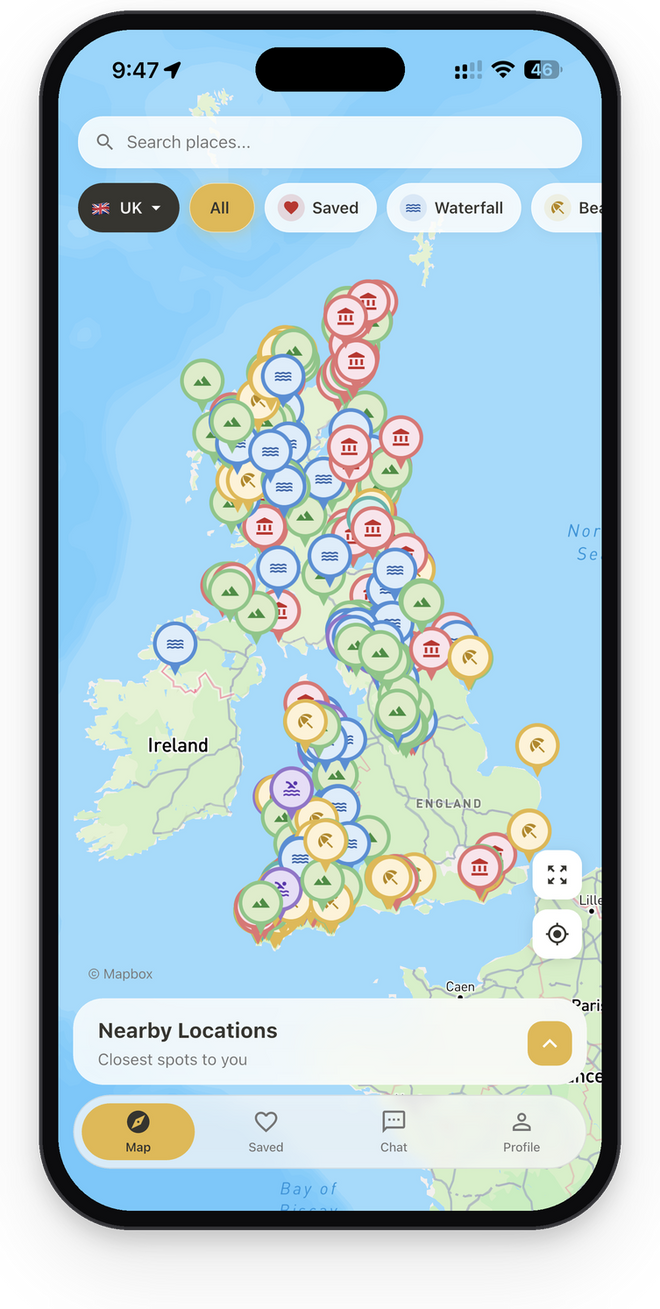
Out for the bluebells? Sole Drift has waterfalls, viewpoints and swim spots nearby, from 500+ spots across the UK, with the exact location.
5Aversley WoodCambridgeshire
The spotThe best bluebell wood in Cambridgeshire, according to the Woodland Trust.
Aversley Wood near Sawtry is a good one if you're coming from the east, where proper bluebell woods are harder to find.
6Hayley WoodCambridgeshire
The spotA Wildlife Trust reserve for serious flower lovers.
Hayley Wood makes the Wildlife Trusts' list, and it's an easy add if you're already at Aversley.
7Dunollie WoodOban
The spotBluebells in a rare patch of Scottish temperate rainforest.
Dunollie Wood is the one for Scotland, and it's an easy add to our Scotland road trip in spring. Expect it later than southern woods.
How to visit without wrecking them

Bluebells are tougher to replace than you'd think. The National Trust says they take about 5 to 7 years to go from seed to flower, and the Woodland Trust warns that whole colonies can die in areas of high footfall.
Do
- Stay on the main paths
- Take photos from the path
- Keep dogs on a lead
- Go early or midweek
Don't
- Step in for the photo
- Follow narrow badger trails
- Pick or dig up the flowers
- Park on verges
Top tip: go early on a still morning or late afternoon. Low light through new beech leaves is when the blue really glows.
Trading in wild bluebell bulbs and seeds is illegal, and the Woodland Trust explains why they're protected. Spanish bluebells are the other threat, as they hybridise with our native plants. Native flowers droop to one side and smell sweet. Spanish ones stand upright.
Want more from a spring day out? Try the Lake District waterfalls or Peak District swims.
Heading to the Lakes? Read about the Wainwrights.
Out in the woods in autumn? Our guide to red squirrels in the UK lists the best places to see them.
Based in London? Our day trips from London has more easy days out in the south east.
Looking for ideas the rest of the year? See our guide to finding days out near you.
Questions people ask
When is the best time to see bluebells?
Usually mid-April to early May. It varies each year, and the south flowers first.
Where can I see bluebells near me?
Check the Woodland Trust, National Trust and your county Wildlife Trust, as all list woods by area.
Are bluebells protected?
Yes. The National Trust says it's against the law to intentionally pick, uproot or destroy them, and trading wild bulbs and seeds is an offence.
Are bluebells poisonous to dogs?
Yes. All parts of the plant are toxic to dogs, so keep them on a lead.
Put it in the diary
You've got about three weeks a year. Don't miss them.
Stick to the paths, keep dogs close and leave the flowers where they are.