


Search for wild swimming in the Peak District and you'll find two very different answers. The National Park says don't. Meanwhile, on any hot weekend, there are people in the pools at Three Shires Head.
Both are true, so this guide gives you the honest picture: what the rules actually say, where they're strict, and the river spots people swim at anyway, with how to do it without getting hurt or upsetting anyone. There's also a heated outdoor pool for days when the river's too cold.
The short version
- Never swim in the reservoirs. The water companies don't allow it, and they're deep, cold and full of hidden hazards.
- The National Park advises getting in only on supervised, organised swims.
- Many river stretches are private, fished or protected for wildlife. Respect any signs.
- If you do swim, go in slowly, never alone, and stay out after heavy rain.
Can you wild swim in the Peak District?
Officially, the Peak District National Park advises that you only get in open water as part of a supervised, organised event or activity. There are no lifeguards or water safety patrols anywhere in the open countryside.
Reservoirs are a firm no. They're owned by Severn Trent Water, United Utilities and Yorkshire Water, and none of them allow wild swimming. The National Park warns they can be deep, with unseen currents, sudden temperature changes and equipment you can't see. That includes Ladybower, Derwent and Howden.
Rivers are less clear cut. The National Park says many stretches are privately owned, have fishing rights or are protected for wildlife, and that swimming isn't permitted unless signs say so, in designated areas. In practice, people have swum at a handful of river spots for years. If you choose to, these are the places to know, and the rules of thumb below matter more than anywhere.
- Read the signs. If a landowner, angling club or warden says no swimming, don't.
- Check the rain. Moorland rivers rise fast. Stay out after heavy rain or when the water's brown and moving quickly.
- Go in slowly. The water is cold even in August, and cold water shock can make you gasp and lose control of your breathing. Never jump or dive in.
- Never swim alone. And know where you'll get out before you get in.
- Check for algae. The National Park warns that blue-green algae can make people ill and can be fatal for dogs. It points to the Environment Agency's weekly updates, and to warning signs at the water. Keep dogs out of any water with scum along the edge.
Heads up: if someone, or a dog, gets into trouble in the water, the National Park's advice is never to go in after them. Call 999 and ask for the Fire Service.
1Three Shires HeadRiver Dane
The spotSmall waterfalls and plunge pools below an old packhorse bridge, where Derbyshire, Cheshire and Staffordshire meet.

Three Shires Head is the best known swim in the Peak District. The River Dane drops in a series of small falls under a stone packhorse bridge, with a dark, deep pool at the bottom, Panniers Pool, and smaller pools up and downstream. It's a walk of about half an hour each way from the roadside parking on the A54, through open moorland.
The main pool gets busy on hot weekends. Walk a little further along the river and you'll often find a quieter pool to yourself. The water comes straight off the moor, so it's cold all year, and the rocks around the falls are slippery.
Where Off the A54, west of Buxton, where three counties meet
Difficulty Easy
Distance 3.4 km return
Duration 1h
Parking2WD accessEE 4GDogs allowed
Best time May to August, for the warmest water
Official info Peak District National Park, wild swimming
Exact location In the Sole Drift app
2Bradford DaleYoulgreave
The spotA small, shallow swimming pool built into the River Bradford below the village of Youlgreave, in a quiet limestone dale.
The River Bradford runs clear and gentle through a wooded dale below Youlgreave, and there's a swimming pool cut into the river just outside the village, deep enough to swim in but about 1.5 m at its deepest, and shallower when the river is low. That makes it one of the gentler swims in the Peak, and a good one for families. The walk down from the village is short, along Alport Lane and into the dale.
Parking in Youlgreave is limited, so arrive early in summer and park considerately. The pool is fed by a limestone river, so it's cold but usually clear.
Where Bradford Dale, just south of Youlgreave, near Bakewell
Difficulty Easy
Distance 1.8 km return
Duration 40m
Limited parking2WD access
Best time June to August, for the warmest water
Official info Peak District National Park, wild swimming
3Slippery StonesUpper Derwent
The spotWide, smooth rock slabs on the upper River Derwent, around an old packhorse bridge above Howden Reservoir.
Slippery Stones is where the River Derwent runs over broad stone slabs before it reaches the reservoirs, and in summer people paddle and swim in the pools in the river. It's well up the valley, past the end of the public road at King's Tree, and from there it's about 1.4 km each way on a track.
Getting there takes planning. Severn Trent's Upper Derwent map shows the road beyond Fairholmes closed to traffic every Sunday, and on Saturdays and bank holidays from Easter to the end of October, so on those days you'll walk or cycle from Fairholmes, about 5 miles each way. Swim in the river only. The reservoirs below are off limits.
Where Upper Derwent Valley, from King's Tree at the end of the reservoir road
Difficulty Easy
Distance 2.8 km return
Duration 45m
Parking2WD access
Best time June to August, on a weekday when the road is open
Official info Severn Trent, Upper Derwent Valley map
Heads up: the Derwent rises quickly after rain on the moors above. If the slabs are under fast water, it's a day for looking, not swimming.
Too cold? Hathersage Pool
If you want an outdoor swim without the river, Hathersage has a heated, open-air pool in the middle of the village, with views up to the moors. Sessions are timed and popular, especially in summer, so book ahead on the pool's own website. It's the one place on this list where swimming in the Peak District is completely by the book.
Where you can't swim
Off limits
- All reservoirs, including Ladybower, Derwent and Howden
- River stretches signed private or no swimming
- Anywhere after heavy rain
Better options
- Guided or organised swims, as the National Park advises
- Hathersage's heated outdoor pool
- Shallow river pools on a dry summer day
For more swims and falls in the north of England, see our guides to Lake District waterfalls and Yorkshire Dales waterfalls.
Further afield, see how to find a safe wild swimming spot in the UK and wild swimming in Scotland.
How Sole Drift helps
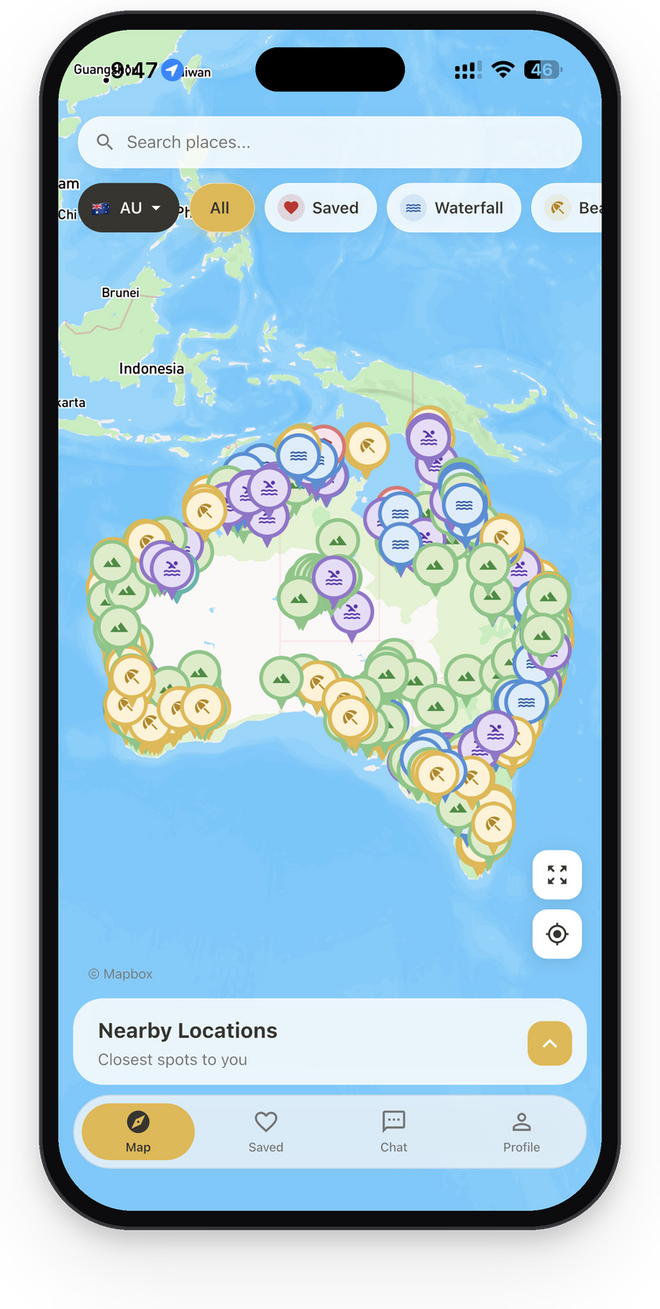
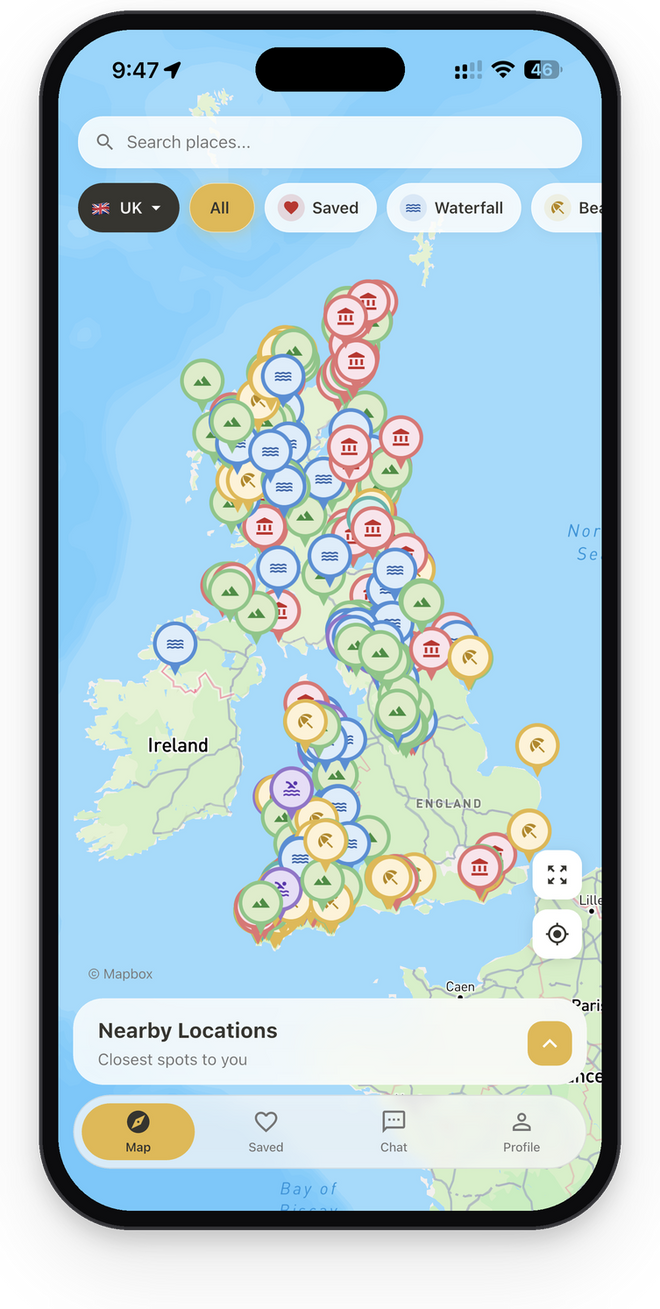
Sole Drift shows the waterfalls, river pools and viewpoints near wherever you are, each with the walk, the best season, parking, phone signal and a "good to know" warning, plus the exact location. Use it to find the spot, then check the signs and the river before you get in.
Sole Drift app
Get the app
Find Peak District waterfalls and river pools, with the walk and the warnings for each. Sole Drift has 500+ spots across the UK.
Here in spring? See the best bluebell woods in the UK too.
Want a walk to go with the swim? See our best walks in the Peak District, from Mam Tor to Dovedale.
Questions people ask
Is wild swimming allowed in the Peak District?
The National Park advises only getting in on supervised, organised swims, and many river stretches are private or protected. People do swim at spots like Three Shires Head, but reservoirs are always off limits.
Can you swim in Ladybower Reservoir?
No. Severn Trent doesn't allow swimming in any of its reservoirs, and they're deep and cold, with hidden hazards.
Where is the best wild swimming in the Peak District?
Three Shires Head is the best known, with pools below a packhorse bridge. Bradford Dale at Youlgreave is gentler and better for families.
Is the water cold?
Yes, all year. Go in slowly to avoid cold water shock, and keep swims short.
Is there an outdoor pool in the Peak District?
Yes. Hathersage has a heated open-air pool. Book a session ahead in summer.
Take your litter home, change discreetly, park considerately and leave the riverbanks as you found them. Read our Leave No Trace guide and our stay safe outdoors guide before you go.