


Everyone worries about snakes and spiders on an Aussie bushwalk. Then they get home, have a shower and find a tiny lump behind their ear.
Ticks are the bite most east coast walkers actually get. Most bites are harmless. A few cause allergies that last for years, and the old way of pulling them out with tweezers is now the thing health authorities tell you not to do.
So here's the current advice, as of November 2026: where ticks live, when they're worst, how to remove one properly, and the signs that mean a doctor (or a vet).
The short version
- The paralysis tick lives in humid bush along the east coast, from Queensland to eastern Victoria.
- Adults are most active from about September to December.
- Freeze the tick with an ether spray from a pharmacy, then let it drop off.
- Never squeeze, twist or pull it out with tweezers.
- Call 000 for trouble breathing, and see a doctor for fever, rash or weakness after a bite.
Which ticks matter in Australia?
Australia has more than 70 kinds of tick, but only 17 feed on human blood, says healthdirect. In eastern Australia, most bites come from one of them: the paralysis tick, Ixodes holocyclus.
The Australian Museum says it lives across the humid coastal regions of eastern Australia, especially wet sclerophyll forest and temperate rainforest. The Australian CDC's paralysis tick factsheet puts its main range within about 20 km of the coast. Mammals and birds are its usual hosts, and the museum says pet dogs are frequently infested.

Size depends on the life stage, which is why people miss them.
0.5 mmlarva
1 mmnymph
4 mmunfed adult
Larva and nymph sizes are from the Australian Museum. Healthdirect says an adult is about 4 mm before it feeds and about 10 mm once it's full. An attached tick can look like a freckle, scab or mole, or just feel like a small lump, says NSW Health.
When is tick season?
Spring is the big one. NSW Health Pathology says September to December is when you're most likely to meet the paralysis tick as an adult, its most dangerous form.
The younger stages run earlier in the year. Larvae, the "seed" or "grass" ticks that turn up in clusters, peak in autumn. Nymphs peak in winter. The Australian Museum says adults are most common from spring to midsummer, and you can find ticks all year round.
Peak risk
- Adults: spring to midsummer
- September to December is the worst stretch
- Long grass and damp forest, after rain
Rest of the year
- Larvae: autumn
- Nymphs: winter
- Ticks can turn up in any month
Where in Australia are ticks a concern?
Ticks live in every state and territory, but the paralysis tick is an east coast problem. The other states have their own ticks, and the official advice differs a little from state to state.
| State or territory | Paralysis tick? | What else to know |
|---|---|---|
| Queensland | Yes, in humid coastal bush | Queensland tick typhus occurs along the east coast. Brown dog ticks in the north west can carry ehrlichiosis, a dog disease |
| New South Wales | Yes, along the coast | Queensland tick typhus also occurs on the coast. NSW Health has the most detailed removal advice |
| ACT | Canberra is inland, outside its humid coastal range | The risk is on trips to the NSW South Coast and other coastal bush |
| Victoria | Yes, into Gippsland in the east | Better Health Victoria lists tick allergy and paralysis among the risks |
| Tasmania | No | Flinders Island spotted fever has been caught on Flinders Island and the east coast, including Schouten Island, and possibly as far south as Kettering and the Midlands |
| South Australia | No | Rickettsial infections are rare but reported on the Fleurieu Peninsula. Ehrlichiosis has been found in dogs in the Far North |
| Western Australia | No | Ticks live in bushland statewide, peak September to April. The common ones are the ornate kangaroo tick and brown dog tick. Ehrlichiosis is found in dogs in the north |
| Northern Territory | No | The brown dog tick is found across the whole NT, and ehrlichiosis has been found in NT dogs |
Sources: NSW Health, healthdirect, Better Health Channel, Tasmanian Department of Health, SA Health, WA Health and the federal ehrlichiosis page, checked November 2026.
Heads up: removal advice isn't identical everywhere. Tasmania's and WA's pages still mention fine tweezers or forceps for some ticks, but WA Health itself says tweezers aren't appropriate in the eastern states where paralysis ticks live. On the east coast, follow the freeze method below.
How to avoid ticks on walks and when camping
Ticks don't jump or fly. They wait on grass and bushes and climb onto whatever brushes past, then usually head for the head, scalp and neck, says ASCIA.

So the fix is mostly about what you wear and checking properly afterwards. This list comes from NSW Health, healthdirect and ASCIA.
- Long sleeves, shirt tucked in
- Long pants tucked into socks
- A wide-brimmed hat
- Light colours, so ticks show up
- Repellent with DEET, picaridin or oil of lemon eucalyptus
- Permethrin-treated clothes for tick country
- Stay on the track and out of long grass after rain
- An ether freezing spray in your first aid kit
- Brush down your clothes before going inside
- Tumble dry clothes on hot for 20 minutes
Then check your whole body, plus kids and dogs. NSW Health lists the spots ticks hide: hairline and ears, under the arms, inside the belly button, around the waist, between the legs and behind the knees.
Top tip: when camping in coastal bush, do the tick check before you get into your sleeping bag, not the next morning. Keep worn clothes in a sealed bag outside the tent until they've been through a hot dryer.
Our hiking essentials list has the rest of the first aid kit.
Sole Drift app
Get the app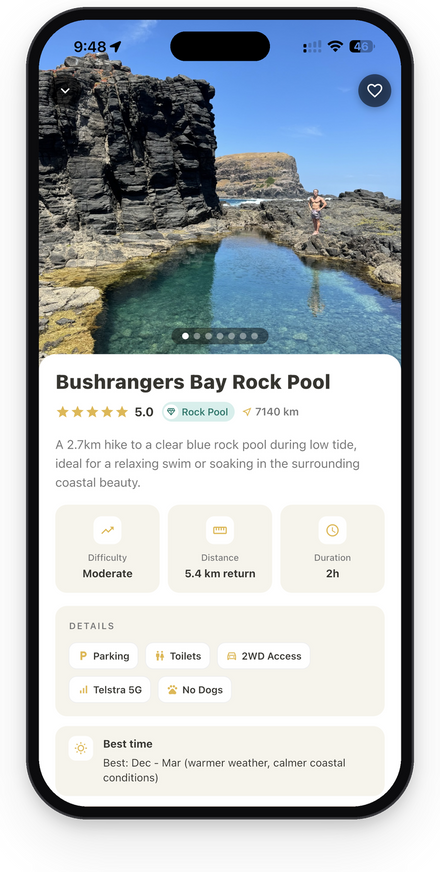
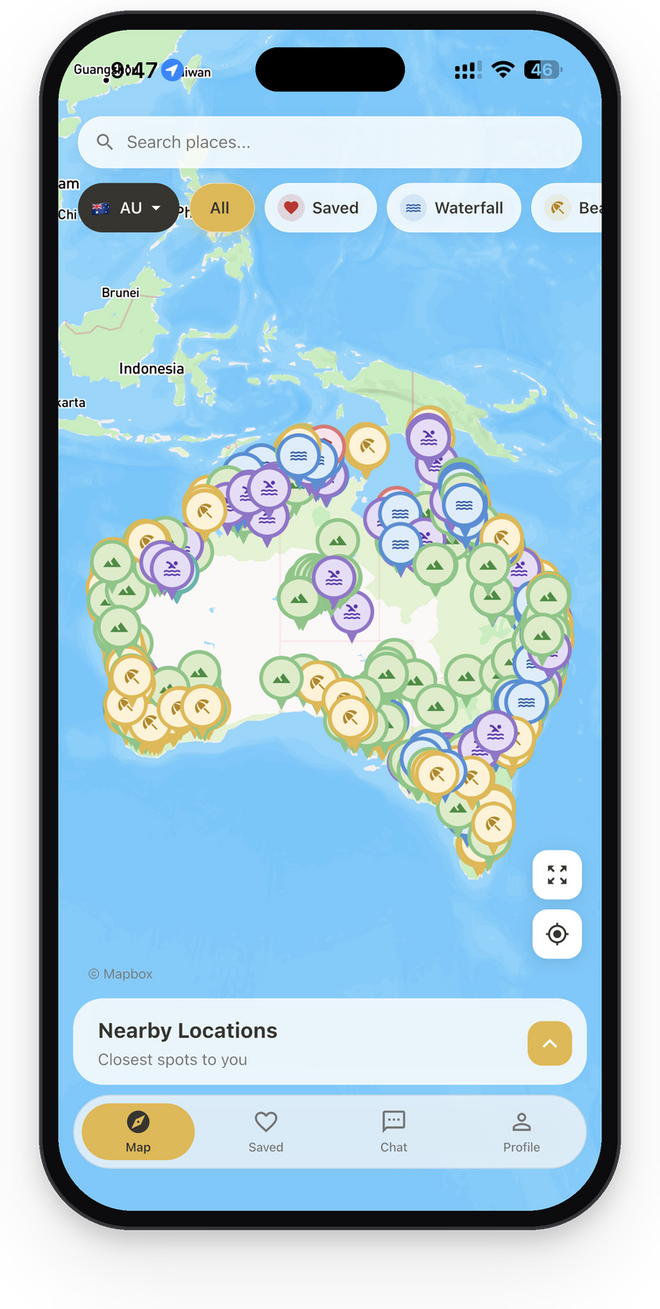
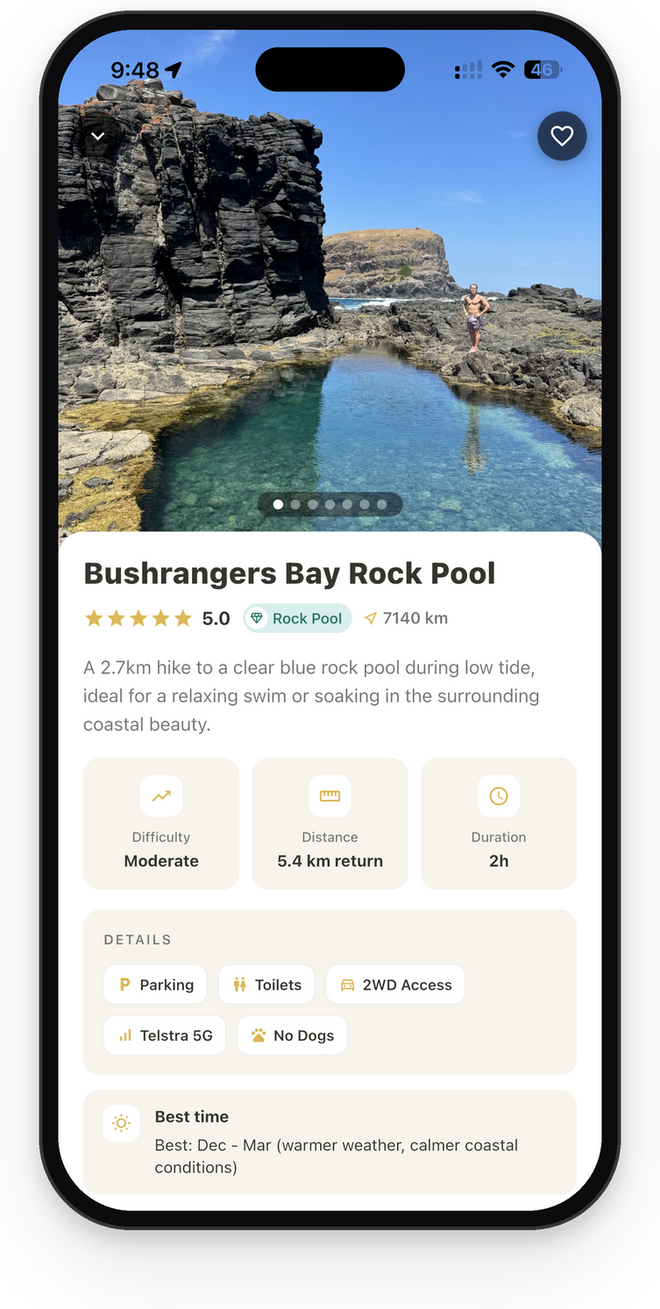
Walking in east coast tick country? Sole Drift lists the walk, best season and "good to know" warnings for 1,100+ spots across Australia.
How to remove a tick: freeze, don't squeeze
This is the bit that's changed. Squeezing, twisting or pulling a live tick can make it inject more saliva, which is what carries the allergen. So the current advice from NSW Health, healthdirect and ASCIA is to kill the tick first, then let it fall off on its own.
If you don't have a known tick allergy:
- Leave it alone. Don't scratch, squeeze or try to pull it out while you get the spray.
- Freeze an adult tick. Spray it where it is with an ether-containing freezing spray from a pharmacy, following the label. If its legs are still moving after a few minutes, spray again.
- Dab a small tick. For tiny larvae or nymphs, put a generous dab of permethrin cream on the tick.
- Let it drop off. Leave the dead tick to fall off by itself. ASCIA says an ether spray usually kills a tick within five minutes.
- Clean up. Wash the area with soap and water.
- Get help if it stays put. If you can't freeze it, or it won't drop off, leave it in place and get urgent medical help.

Do
- Freeze adult ticks with ether spray
- Dab tiny ticks with permethrin cream
- Let the tick drop off by itself
Don't
- Pull it out with tweezers
- Squeeze, twist or scratch it
- Use metho, kerosene, Vaseline, nail polish, oil or alcohol
NSW Health says those home remedies don't work and may make the tick burrow deeper. Healthdirect adds a lit match to the list.
Heads up: if you know you're allergic to ticks, don't touch it at all. NSW Health says to get urgent medical help as soon as you find an attached tick, follow your ASCIA Action Plan and carry your adrenaline autoinjector. ASCIA says highly allergic people should have ticks removed in an emergency department.
Tick bite symptoms: when to see a doctor
Most bites cause redness, itching and a bit of swelling. Healthdirect says a mild local reaction can hang around for several days. That's normal.
These aren't.
- Trouble breathing or noisy breathing: call 000
- Swollen tongue or throat: call 000
- Wheeze, persistent cough or hoarse voice: call 000
- Dizziness or collapse: call 000
- Young child pale and floppy: call 000
- Fever, rash or flu-like illness: see a doctor
- Problems walking or increasing weakness: see a doctor
- A tick that won't drop off: get urgent medical help
The breathing signs are anaphylaxis. Use an adrenaline autoinjector if one's available, lie the person down with their legs raised and call 000. ASCIA says anaphylaxis is most likely when a tick is disturbed.
Tick paralysis in people is rare. Healthdirect says the tick has to stay attached for 4 to 5 days, and symptoms include headache, blurred vision, weakness and poor balance. For anything you're not sure about, healthdirect's nurse line is 1800 022 222, 24 hours a day.
Tick-borne illness and mammalian meat allergy
Ticks in Australia can pass on rickettsial infections: Queensland tick typhus, Australian spotted fever and Flinders Island spotted fever. Healthdirect says the tick needs to be attached for at least 24 hours for these to spread, which is one more reason to check yourself the same day. They're treated with antibiotics, so tell your GP about the bite if you get a fever, headache or rash afterwards.
What about Lyme disease? Healthdirect says Australian ticks aren't known to carry the bacteria that cause it.
Mammalian meat allergy
This is the strange one. A tick bite can leave some people allergic to red meat.
ASCIA says Australian specialists first described the link. The allergen, alpha-gal, is found in tick saliva and gut, and in mammalian meat. Symptoms usually start four to six hours after eating meat, which is why people don't connect it to the steak at dinner, let alone a bite from months ago.
It can show up as gut trouble that looks like irritable bowel syndrome, hives and swelling, or anaphylaxis. People who have it avoid all mammalian meat (beef, lamb, pork, goat, kangaroo, venison), meat products and mammalian gelatine. An allergy specialist has to diagnose it.
The useful bit for walkers: ASCIA says further tick bites can more than double the allergy antibody levels, and avoiding bites can lead to improvement over 18 to 24 months. So if you've got it, tick prevention really matters.
Ticks on dogs
Dogs cop it worse than people, and tick paralysis can kill a dog if it isn't treated quickly. The RSPCA says the season can run all year in the north, and from spring to late autumn further south.
Watch for these signs of tick paralysis, from the RSPCA:
- Wobbly back legs or can't stand
- A change in the sound of the bark
- Retching, coughing or vomiting
- Drooling or loss of appetite
- Weakness spreading to the front legs
- Laboured or noisy breathing
If you see any of them, get to a vet straight away. Keep the dog calm and at a comfortable temperature, and don't give food or water, because an affected dog can't protect its airway when it swallows.

Search your dog every day in tick season, even if it's on a tick product. The RSPCA says most ticks are found in front of the front legs: face, neck and ears. Take the collar off and run your fingertips through the coat, then check the lips, armpits, between the toes and under the tail. Ask your vet which prevention product suits your dog, and never use a dog product on a cat, as some are highly toxic to them.
Heading north with a dog? The brown dog tick can carry ehrlichiosis, a serious dog disease first found in northern WA in 2020. The federal dog owner guidelines recommend constant tick control for dogs living in or travelling through affected areas. Our guide to camping with dogs covers where dogs are allowed in the first place.
Questions people ask
How do you remove a tick in Australia?
Freeze it, don't squeeze it. NSW Health says to spray an adult tick with an ether freezing spray, dab tiny ticks with permethrin cream, and let the dead tick drop off by itself.
Should you pull a tick out with tweezers?
Not on the east coast. Healthdirect and ASCIA say pulling, squeezing or twisting a live tick can make it inject more saliva, which can trigger allergy.
When is tick season in Australia?
Spring is the peak. NSW Health Pathology says September to December is when adult paralysis ticks are most active, but ticks can be found all year.
Where are paralysis ticks found?
In humid coastal bush along the east coast, from Queensland through NSW into Gippsland in Victoria. They aren't found in WA.
Can a tick bite make you allergic to red meat?
Yes. ASCIA says tick bites can cause mammalian meat allergy, with symptoms usually starting four to six hours after eating meat.
Do Australian ticks carry Lyme disease?
Healthdirect says Australian ticks aren't known to carry the bacteria that cause Lyme disease. They can carry rickettsial infections like Queensland tick typhus.
Check, freeze, carry on
Ticks are a small, boring risk that's easy to manage. Dress for it, check properly after every walk and keep a freezing spray in the kit.
For the rest of the critters, our guides to snakes in Australia and the most dangerous animals in Australia cover what to do and what to skip.
This is general information, not medical advice. In an emergency, call 000.
Stay on the track, check yourself, your kids and your dog after every walk, and leave the bush the way you found it.