


Everyone says they've seen the stars. Then they get three hours out of the city on a moonless night, and they realise they hadn't.
Australia's one of the best places on earth for this. There's a lot of dark, plenty of clear nights, and a southern sky packed with the Milky Way's bright centre.
Here's where to go, how to find a dark spot near you and how to time it. You don't need a telescope. You need a dark sky, no moon and a bit of patience.
The short version
- Warrumbungle in NSW was Australia's first International Dark Sky Park.
- Arkaroola in SA is an International Dark Sky Sanctuary.
- Go near the new moon for the darkest skies.
- Give your eyes 20 minutes to adjust, and keep your phone away.
- The Milky Way's core is best in the cooler months.
How to find stargazing near you
- Get away from the glow. Aim for a few hours from any city, and keep the city behind you.
- Check the moon. Pick a night near the new moon.
- Check the cloud. A clear forecast matters more than anything else.
- Find somewhere safe. Use a campground or lookout that you can reach easily at night.
The DarkSky place finder lists the certified sites in Australia. They're the gold standard, but any dark campsite away from town works.
1Warrumbungle National ParkNSW
The spotAustralia's first International Dark Sky Park.

Warrumbungle was the first in the country, and NSW National Parks shows why. You can hike by day and lie out at night, as Visit NSW sets out. It's a long drive from any capital, so give it a weekend at least.
2ArkaroolaSouth Australia
The spotA remote sanctuary in the northern Flinders Ranges.

Arkaroola became South Australia's first International Dark Sky Sanctuary in 2023. It runs its own astronomy experiences, so you can use proper telescopes. It's a long way from anywhere, and that's the point.
Sole Drift app
Get the app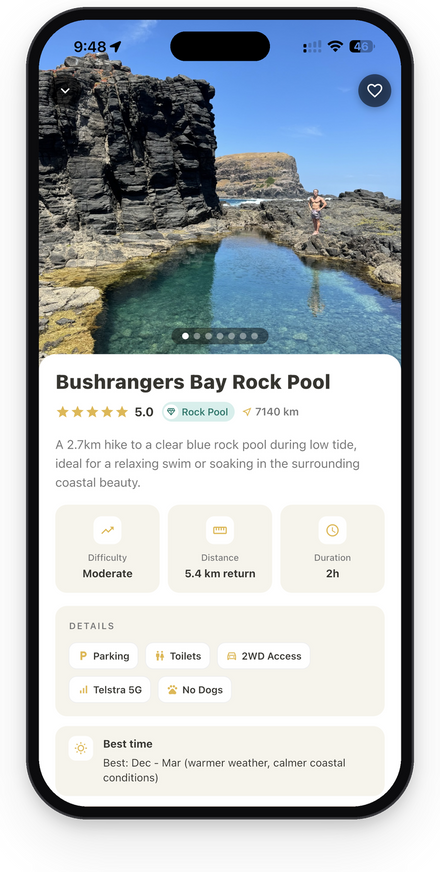
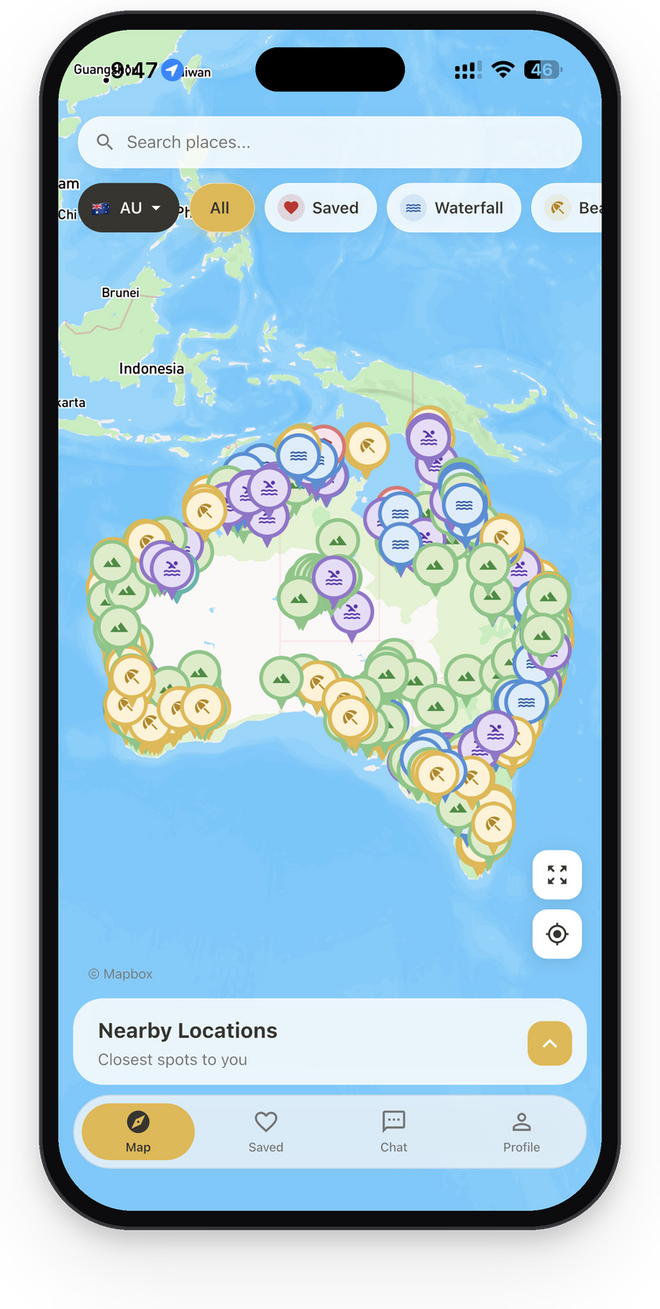
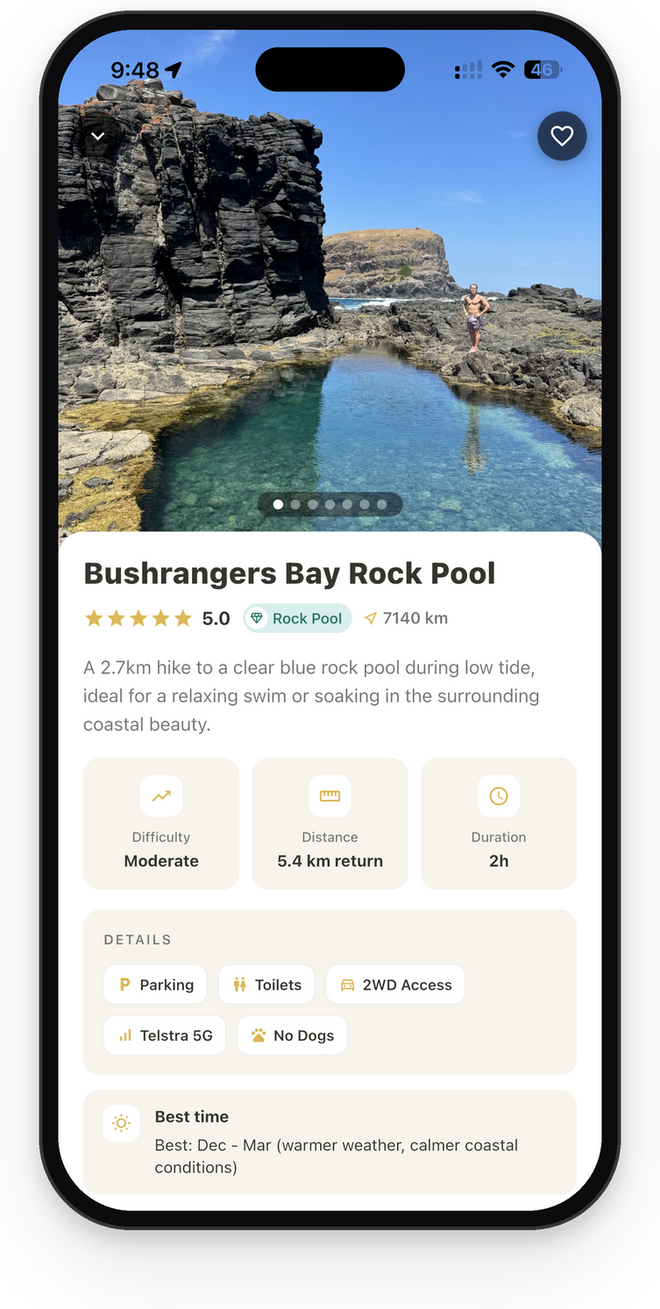
Chasing dark skies? Sole Drift has lookouts and remote spots with the access and signal listed, from 1,100+ spots across Australia.
3Anywhere remote
The spotAlmost any dark camp in the outback.
You don't need a certificate. The Pinnacles from our day trips from Perth, a forest camp from free camping in Victoria, or a campsite on a 4WD track can all be spectacular if there's no moon.
Heads up: remote roads at night mean wildlife. Set up in daylight, and don't plan on a long drive home in the dark. On a private property or a farm, ask first.
When to go

Best timing
- Near the new moon
- After midnight for the darkest sky
- Clear, dry nights
Milky Way
- The bright core shows best in the cooler months
- In winter it runs high overhead
- Summer shows the fainter parts
What to bring
- Warm layers, even in summer
- A camp chair or mat
- A red light, or red mode on your head torch
- A thermos
- Binoculars, if you've got them
- A tripod for photos
- Bug spray
Top tip: your eyes take around 20 minutes to adjust, and one bright phone screen resets them. Turn on a red filter or put it away.
Binoculars are underrated. Even a cheap pair shows far more stars in the Milky Way than your eyes alone. For photos, try your phone's night mode on a tripod.
Mad about the night sky? In the UK, we've got a guide to the northern lights. For the whole trip, see the best time to visit Australia and our camping checklist.
Closer to home, our guide to the aurora australis in Tasmania explains the BOM alerts and the best dark spots.
Driving through the Centre? Our Red Centre Way road trip has camps well away from town lights, from the West MacDonnells to Uluru.
Want more glow? Our guide to bioluminescence in Australia covers glowing water and glow worms. In the UK, see our guide to dark sky parks.
Questions people ask
Where is the best stargazing in Australia?
Warrumbungle in NSW and Arkaroola in SA are officially certified, and much of the outback is excellent too.
When is the best time to see the Milky Way in Australia?
The core shows best in the cooler months, on a moonless night away from town.
How do I find dark skies near me?
Drive a few hours from the nearest city, keep its glow behind you, and check the DarkSky place finder.
Do I need a telescope?
No. Your eyes and a pair of binoculars are plenty on a dark night.
Look up
The best show in Australia is free, and it starts when the sun goes down.
Keep lights low at camp, stay on the tracks and leave the dark places dark.