


Most people picture au pairing as free rent, a bit of babysitting and weekends on the beach. Sometimes that's exactly what it is.
Other times it's 50 hours a week, a 6 am start and a family who think your room counts as your wages.
The difference usually comes down to what you check before you say yes. Here's how au pairing in Australia works as of November 2026: the visa, what the law says about pay, how to find a good family and how to spend your days off properly.
The short version
- There's no separate au pair visa. Most au pairs come on a 417 or 462 working holiday visa.
- Since 1 January 2024, nanny and au pair work is exempt from the 6 month limit with one employer.
- Fair Work says au pairs are often employees, and employees get at least the minimum wage.
- The national minimum wage is $26.44 an hour from 1 July 2026.
- Get hours, pay, duties and days off in writing before you fly.
What does an au pair actually do in Australia?
An au pair lives with a host family and helps look after the kids. In return you get a room, meals and usually some money, plus a proper look at Australian family life.

The day to day usually means school and daycare runs, getting kids fed and dressed, after-school activities, bath and bedtime, and light housework linked to the children: their washing, their rooms, their meals.
What it shouldn't mean is cleaning the whole house, cooking for the adults every night or being on call around the clock. If the ad reads like a housekeeper's job description, it probably is one.
Which visa do au pairs use?
Australia doesn't have an au pair visa. Almost everyone comes on a working holiday visa: the Working Holiday visa (subclass 417) or the Work and Holiday visa (subclass 462). Your passport decides which one.
Both let you work in any kind of job during your 12 month stay. Most people need to be 18 to 30 when they apply, and some 417 countries, including the UK, go to 35. Our working holiday visa guide covers the fee, the money you need and how to apply.
The 6 month rule, and why au pairs are exempt
Every working holiday visa comes with condition 8547, which normally limits you to 6 months' work with any one employer. For an au pair, your host family is your employer.
But Home Affairs lists critical sectors that are exempt, and childcare is one of them. Its list for childcare names "nanny/au pair" outright. So from 1 January 2024, you can stay with the same family for more than 6 months without asking permission.
Heads up: Home Affairs says these exemptions apply "until the Government makes further decisions". This is the rule as of November 2026. Check the condition 8547 page before you plan a 12 month placement, and if your work ever falls outside the exemptions, you'd need to request permission before your first 6 months are up.
One more catch. Au pair work doesn't count towards a second or third visa, because childcare isn't on the specified work list. If you want another year, you'll need to fit regional work in too, unless you hold a UK passport: since 1 July 2024, UK passport holders can get a second and third Working Holiday visa without any specified work.
How much do au pairs get paid in Australia?
This is the bit agencies and Facebook ads tend to skip.
The Fair Work Ombudsman says whether an au pair is an employee depends on the individual relationship. In its words, au pairs "are often employees too". Some live with a family mainly for the cultural experience and only help a little with the kids. Others work long hours as live-in child carers.
The test Fair Work gives is control. If the family has a lot of control over your day to day activities, you're likely to be an employee.
If you are an employee, a few things follow:
- You're covered by the Miscellaneous Award. Fair Work says it covers employees in a private home caring for children, preparing their meals, planning their activities and doing light housework.
- You get at least the minimum wage. The national minimum wage is $26.44 an hour from 1 July 2026, and $33.05 for casuals on it. The award rate for your role can be higher, so run your hours through the Fair Work pay calculator.
- Your visa doesn't change your rights. Working holiday makers have the same workplace rights as everyone else.
$26.44minimum per hour
$33.05casual minimum
30 hourssuper threshold
Do the maths before you sign. Thirty hours a week at $26.44 is $793.20 before tax. If an offer is a fraction of that "plus board", ask how they've worked it out.
What about board and lodging?
Your room and meals are a real benefit, but they're not automatically part of your pay. Fair Work's rule on deducting pay is that an employer can generally only take money out of your wages if you've agreed in writing and the deduction is mainly for your benefit.
Fair Work doesn't publish a set figure for board and lodging. If a family wants to count your room against your wages, get the exact amount in writing and ask Fair Work (13 13 94) whether it stacks up.
How to find a family safely
You've got two main routes: an agency, or finding a family directly through au pair sites and groups.
Agency
- Many screen families first
- Someone to call if it goes wrong
- Often help you rematch
- Can charge fees, so read the terms
Going direct
- No middle person checking anything
- All the screening is on you
- No backup if it falls apart
- More choice and no agency fees
Either way, do the checks yourself. Agencies vary, and a good-looking profile proves nothing.
- Video call the whole family. Meet both parents and, ideally, the kids. Ask to see your room on camera.
- Talk to a past au pair. A good family will happily put you in touch. A family that won't is telling you something.
- Pin down the hours. Get a weekly timetable, not "about 30 hours". Ask what happens when a child's sick or a parent works late.
- Agree pay and deductions. The hourly rate, when you're paid, and anything taken out for board, all in numbers.
- Get it in writing. Hours, duties, pay, days off, holidays, car use and notice period, signed by both of you before you book a flight.
- Have a plan B. Keep enough money for a few weeks in a hostel and a flight to another city.
Red flags
- They want to keep your passport
- Pay is "pocket money" with no hourly figure
- No set hours or days off
- Heavy cleaning or cooking for adults
- You must pay them a fee or deposit
- They won't put anything in writing
- No past au pair you can talk to
- Pressure to decide in a day
Heads up: if your pay looks wrong or a family threatens your visa, contact the Fair Work Ombudsman on 13 13 94. Employers must give new employees the Fair Work Information Statement, so ask for it on day one.
What a typical week looks like
Every family's different, but a fair live-in arrangement often looks something like this:
| Day | Typical shape |
|---|---|
| Monday to Friday | Breakfast and school run, then free time, then pick-up, homework, dinner and bath |
| One weekday | A longer day while a parent works late |
| Saturday | Off, or a short babysitting block agreed in advance |
| Sunday | Off |
The split shift is the thing to watch. Seven in the morning to nine at night with a gap in the middle can look like a short day on paper and feel like a long one. Ask whether you're free to leave the house in that gap.
Top tip: keep a simple log of the hours you actually work each week. If anything goes wrong, Fair Work will want to see it.
Driving and the family car
A lot of au pair jobs need a driver, especially in the suburbs where school, swimming and footy are all in different places.
How long you can drive on an overseas licence depends on the state. These are the rules for temporary visa holders as of November 2026, from each state's transport website.
| State | Temporary visa holders on an overseas licence |
|---|---|
| NSW | 6 months, if you arrived after 1 July 2023 |
| Victoria | 6 months |
| Queensland | While your licence is current |
| WA | While your licence is current |
| SA | No set deadline |
| Tasmania | While your licence is current |
| ACT | While your licence is current |
| NT | 3 months |
Your licence must be current and with you whenever you drive. If it isn't in English, check your state's page for whether you need a translation or an International Driving Permit.

Before you agree to drive the kids, ask:
- Does their insurance cover you as a driver?
- Is there a young or overseas driver excess?
- Who pays for fuel, tolls and fines?
- Can you use the car on days off?
- Are the car seats fitted properly?
- Who do you call after a breakdown?
Australia drives on the left. If you're used to the right, ask for a few practice runs without the kids in the back first.
Tax and super
If you're paid as an employee, you'll need a tax file number. Registered employers withhold a flat 15% on your first $45,000 as a working holiday maker. Our guide to your first week in Australia walks you through getting a TFN, a bank account and a SIM.
Super works a little differently for au pairs. The ATO says a family has to pay super for a domestic or private worker, such as a nanny, for any week they work more than 30 hours. Under that, they don't have to, however much they pay.
Using your days off to see the country
This is the best part, and plenty of au pairs waste it on the couch.

Living with a family puts you in the suburbs, which is often closer to the good stuff than a city hostel. Bush walks, rock pools and lookouts are often a short drive or a train ride away. Weekends off are perfect for day trips, and a week of school holidays can mean a proper road trip.
Sole Drift app
Get the app
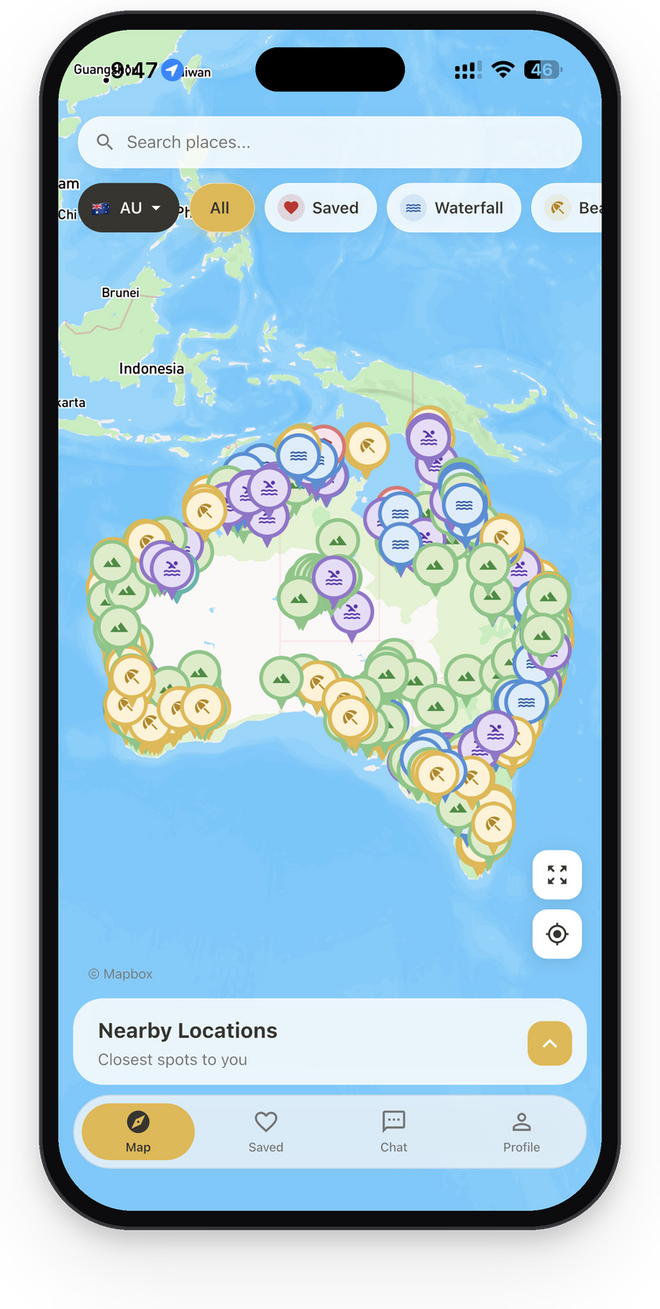
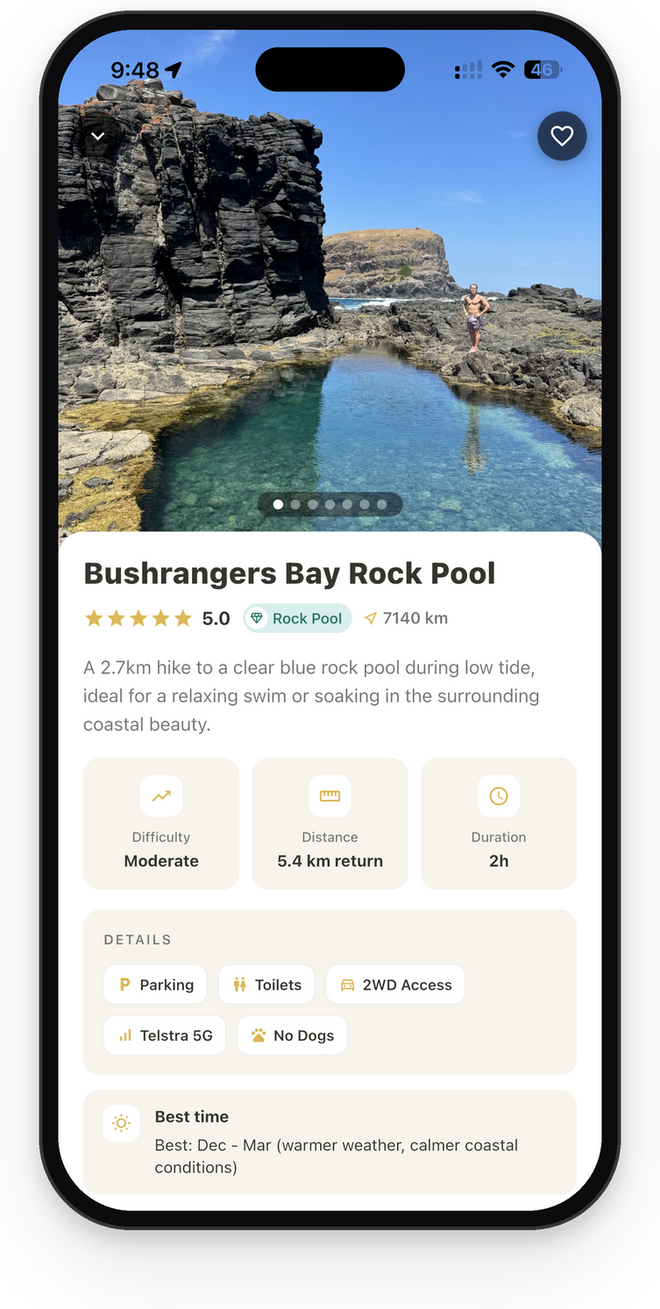
Got the weekend off? Sole Drift maps waterfalls, swims and lookouts near your host family, from 1,100+ spots across Australia, with the exact location.
Ask your host family too. Locals always know a beach or a walk that's not on the tourist list, and they'll often lend you the car if you ask nicely.
If you're coming from Britain and thinking of staying longer, our moving to Australia from the UK guide covers the bigger picture. Want to mix in other work? See backpacker jobs in Australia.
Questions people ask
Is there an au pair visa for Australia?
No. Most au pairs come on a Working Holiday visa (subclass 417) or a Work and Holiday visa (subclass 462), depending on their passport.
How much do au pairs get paid in Australia?
If you're an employee, at least the minimum wage: $26.44 an hour from 1 July 2026. Fair Work says au pairs are often employees, so check your hours with its pay calculator.
Can an au pair stay with one family for more than 6 months?
Yes, as of November 2026. Home Affairs lists nanny and au pair work as an exempt critical sector, so you don't need permission. Check the condition 8547 page in case this changes.
Does au pair work count towards a second year visa?
No. Childcare isn't specified work, so you'd need eligible regional work as well. UK passport holders are the exception: since 1 July 2024 they don't need specified work for a second or third year.
Can my host family take board out of my pay?
Only within Fair Work's rules. Deductions generally need your written agreement and must mainly benefit you, so get any amount in writing.
Pick the family, not just the city
A great family makes the year. A bad one can wreck it.
Get everything in writing, know your rights, and treat the places you explore on your days off with the same respect you'd want in your own backyard.