


Most people spend their first year in Australia telling themselves they'll sort the second year visa later. Then later turns into six weeks before their visa runs out.
The rules aren't hard. But they're strict, they're different for the 417 and the 462, and Home Affairs won't bend them because it rained for a fortnight.
Here's who is eligible for a second and third working holiday visa, what work counts where, how the days add up, what proof to keep and how to apply, all checked against Home Affairs as of November 2026. If you're still hunting for the work itself, our 88 days farm work guide covers finding a job. This one is about getting the visa.
The short version
- A second visa needs 3 months of specified work done on your first visa.
- A third visa needs 6 months of specified work done on your second visa.
- The 417 and 462 have different industries and areas, so check your own list.
- UK passport holders lodging on or after 1 July 2024 need no specified work at all.
- Keep payslips and bank statements for every day you claim.
88 daysfor a second visa
179 daysfor a third visa
12 monthseach visa
Who is eligible for a second year visa?
For both the 417 (Working Holiday) and the 462 (Work and Holiday), Home Affairs lists the same core rules. You must:
- Have held a first visa of the same subclass and entered Australia on it
- Have complied with all the conditions on your first visa
- Still be within the age limit when you apply
- Have done 3 months of specified work, unless you're exempt
- Have about AUD 5,000, plus the fare out of Australia
- Not bring dependent children, at any point
The age limit is the one that bites. For the 462 it's 18 to 30 inclusive. For the 417 it's 18 to 30, or 18 to 35 for some passports, including the UK, Canada, France, Germany, Ireland, Italy and South Korea. The full list is on the second 417 visa page.
Heads up: the deadline is midnight Australian Eastern time the day before your 31st (or 36th) birthday, even if you're applying from overseas. Home Affairs suggests not lodging on your birthday at all. If you apply in time and turn 31 before the decision, you can still be granted.
UK passport holders: you can skip the work
Since 1 July 2024, UK passport holders can get a second and a third 417 without any specified work, as long as they apply on or after that date using their UK passport. Everything else still applies: age, money, health, character and the conditions of your first visa.
Dual nationals, take note. The exemption only works if you lodge on the UK passport.
417 vs 462: what counts as specified work, and where?

Specified work is work in an approved industry, in an approved area. Both have to be true. This is where the two visas split, and it's the part people get wrong because they read a forum post written by someone on the other visa.
Subclass 417
- Plant and animal cultivation in regional Australia
- Fishing and pearling in regional Australia
- Tree farming and felling in regional Australia
- Mining in regional Australia
- Construction in regional Australia
- Tourism and hospitality in Northern or Remote and Very Remote Australia
Subclass 462
- Plant and animal cultivation in Northern Australia or regional Australia
- Fishing and pearling in Northern Australia only
- Tree farming and felling in Northern Australia only
- Construction in Northern Australia or regional Australia
- Tourism and hospitality in Northern or Remote and Very Remote Australia
- No mining
Both visas also count bushfire recovery work in declared areas (done after 31 July 2019) and recovery work after floods, cyclones and severe weather in declared areas (done after 31 December 2021). That recovery work can be paid or volunteer. Volunteering anywhere else doesn't count.
Home Affairs is also, for now, giving more weight to the industry than the job. Its pages say work that supports a specified industry, like admin or cleaning, in an eligible postcode may be accepted. That's a temporary flexibility, so don't build your whole plan on it.
The 417 specified work page and the 462 specified work page have the full definitions and the postcode lists.
Which areas count in each state and territory?
The regional postcode list is the same for both visas. What changes is which industries you can do there. Here's how it breaks down as of November 2026. Always check the exact postcode on the Home Affairs list before you start.
| State or territory | Regional Australia (farm and construction for both visas; also mining, fishing and forestry for 417) | Northern Australia (all specified industries for 462, plus tourism and hospitality for both) | Remote and Very Remote (tourism and hospitality for both) |
|---|---|---|---|
| NSW | Listed postcodes only. Sydney, the Central Coast, Newcastle, Wollongong and the Blue Mountains aren't on it | None | A few listed postcodes, mostly in the far west |
| Victoria | Listed postcodes only. Metropolitan Melbourne isn't on it | None | A handful of listed postcodes |
| Queensland | Listed postcodes only. Brisbane and most of the Gold Coast aren't on it | Listed postcodes in the north, including Mackay, Townsville and Cairns | Many listed postcodes in the north and outback |
| South Australia | Every postcode | None | Listed postcodes outside Adelaide |
| Western Australia | Listed postcodes only. Most of metropolitan Perth isn't on it | Listed postcodes in the Pilbara and Kimberley | Many listed postcodes in the wheatbelt, goldfields and north |
| Tasmania | Every postcode | None | A few listed postcodes, including 7215 on the east coast |
| Northern Territory | Every postcode | Every postcode | Every postcode |
| ACT | None | None | None |
The ACT only counts for bushfire recovery work, where every ACT postcode is a declared area. Norfolk Island is regional for both visas.
Top tip: ask for the postcode of the actual worksite, not the head office or the hostel. That's the one Home Affairs looks at.
How are the days counted?

Home Affairs defines 3 months as the three shortest calendar months, which is 88 calendar days including weekends and rest days. Six months is 179 calendar days. What you need is the same number of normal days or shifts a full-time worker in that role would do in that period.
The rules that matter most:
- You can split it across employers and time
- Part-time counts, but takes proportionately longer
- You can't finish faster than 3 or 6 calendar months
- One calendar day is never more than one day
- Paid public holidays and paid sick days count
- Unpaid rain days don't count
The double shift trap catches people every season. If the normal day is 5 hours, working 10 hours doesn't give you two days, even across two employers.
Rostered shift work can work in your favour. If two weeks on and two weeks off is standard in that industry and you're paid for the whole cycle, all 28 days can count. Keep the contract that says so.
Our 88 days guide walks through the maths with examples if you're mid-count.
When the work has to happen
For a second visa, all your specified work must be done while you hold your first visa. For a third visa, it must be done on your second visa, on or after 1 July 2019. Work from your first visa doesn't roll over to the third.
There's one useful exception. If you apply for your second visa while your first is still in effect, and your first visa expires while you wait, the specified work you do on the resulting bridging visa counts towards your third.
Work done on a student visa, a visitor visa or any other visa doesn't count.
Sole Drift app
Get the app
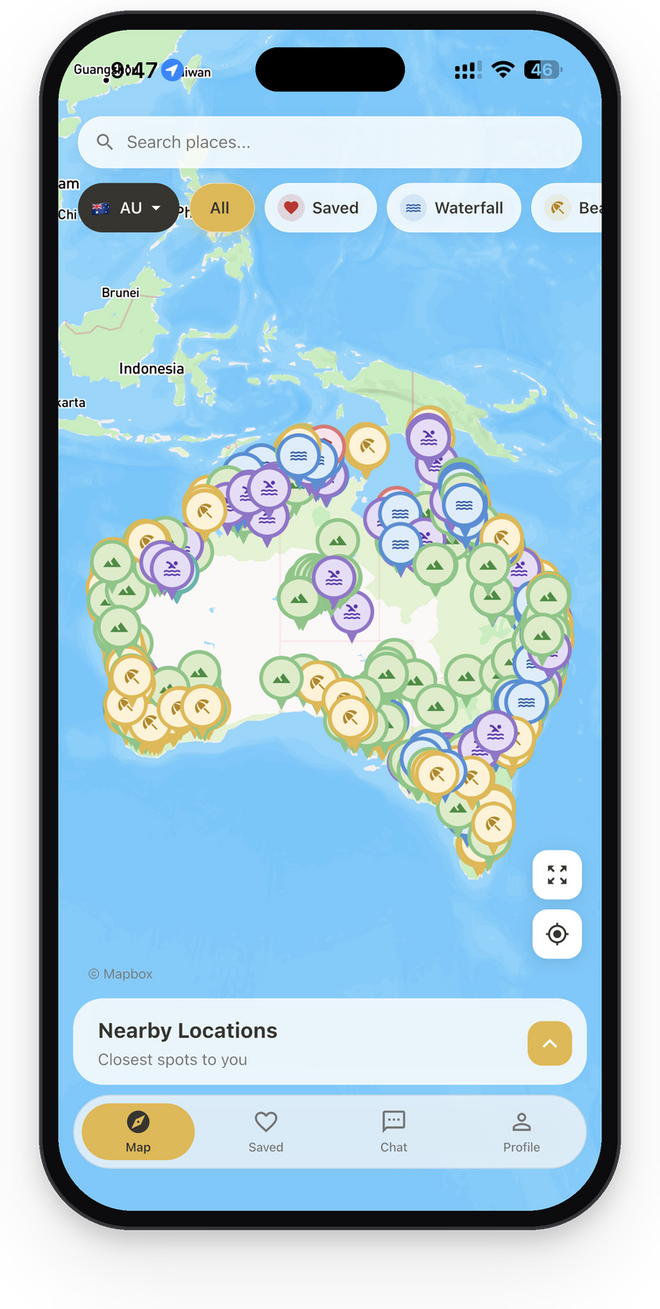
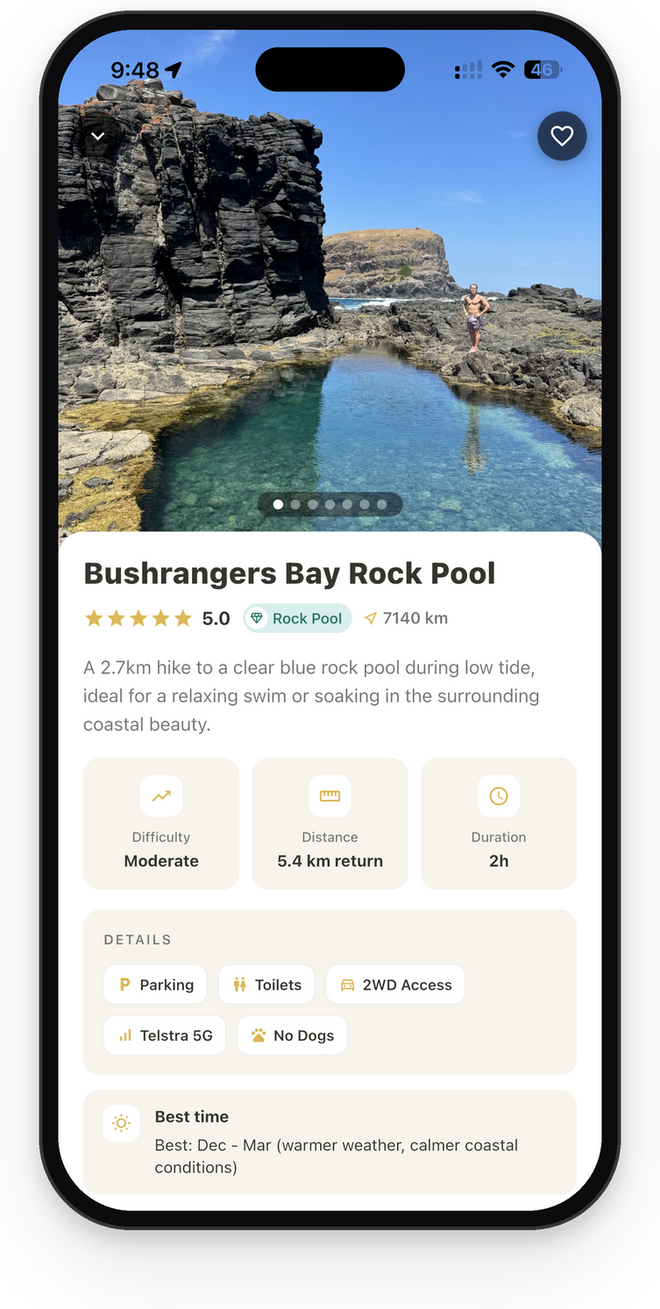
Doing your days somewhere regional? Sole Drift has 1,100+ spots across Australia, with the exact pin for the swims and waterfalls near your farm.
What evidence should you keep?

Home Affairs wants proof that covers every period you claim. Not most of it. All of it. It also says it might contact your employers to check.
Accepted evidence includes:
- Payslips
- Australian bank statements for the same period
- Your piece rate agreement, showing the rate and how it's measured
- Payment summaries or group certificates
- Tax returns
- Employer references
- A signed agreement for any lawful pay deductions
For volunteer bushfire or disaster recovery work, you need a signed letter from the coordinator or host with your passport number, your duties, the postcode and the number of days.
Get into the habit early. Screenshot every payslip, note the start and end dates of each job and the worksite postcode, and make sure the money lands in your Australian bank account. Cash in hand with no payslip is the fastest way to lose days you actually worked.
Heads up: specified work has to be paid in line with Australian law and awards. If you were underpaid, the work can fail the test, and that's on top of being out of pocket. Our backpacker jobs guide covers what you should be earning.
How and when to apply


You can apply from inside or outside Australia. Where you are when you lodge decides the rest: apply in Australia and you must be in Australia when it's granted, apply outside and you must be outside.
- Finish the work first. Your 88 or 179 days need to be done before you lodge, and you can't count work done on another visa.
- Gather your documents. Passport pages, a birth certificate with both parents' names, and your specified work evidence. Scan everything in colour, one file per document.
- Log in to ImmiAccount. It's the same account you used for your first visa.
- Fill in the form honestly. Pick your current location correctly. For disaster recovery work, choose "flood recovery paid" or "flood recovery volunteer" as the employment type.
- Pay and lodge. Nothing is processed until you pay. Note your transaction reference number.
- Wait for the grant. Health checks, biometrics or police certificates may be requested along the way.
Home Affairs says the average processing time for working holiday visas is around three months, as of November 2026. So don't leave it to the last week.
If you apply in Australia while your first visa is still running, you can be granted a bridging visa that keeps you here lawfully until a decision. If you were on your first visa or that bridging visa when the second is granted, your 12 months run from the date your first visa expired. So applying early doesn't cost you any time.
Apply from overseas and the 12 months start the day you enter Australia, and you must enter within 12 months of the grant.
What does it cost?
As of November 2026, a second or third Working Holiday (417) or Work and Holiday (462) visa costs AUD 1,000 for the main applicant. Home Affairs shows the current charge on each visa page and in its Visa Pricing Estimator. Charges usually change on 1 July, so check the figure on the day you lodge. You might also pay for health checks, police certificates and biometrics.
Common reasons people get caught out

Most refusals and near misses come down to the same handful of mistakes.
Following the wrong visa's rules. A 462 holder doing a mining job or a southern fishing job because a 417 mate said it counts. Check your own list.
Wrong postcode. The farm address, the packing shed and the town you live in can all sit in different postcodes.
Counting rain days. Unpaid days off for weather don't count, and Home Affairs says it won't make exceptions for bad weather or any other reason. Start early.
Part-time maths. Two days a week for three months is not three months. You'd need to keep going for proportionately longer.
Breaking a first visa condition. The usual one is staying with one employer too long. Home Affairs says you can usually only work for the same employer for 6 months. You must have complied with your first visa's conditions to be eligible.
Missing the age cut-off. Midnight Australian Eastern time, the day before your birthday.
Getting another visa after the grant. If you're granted an eVisitor or transit visa after your working holiday visa, your working holiday visa ceases. An ETA doesn't cancel it, but entering Australia starts your 12 months, even if you're only passing through.
Applying too early from overseas. You only get 12 months from the grant to enter. Home Affairs says to apply only once you're ready to travel.
Questions people ask
How many days do you need for a second year visa in Australia?
88 calendar days of specified work, worked to the same days as a full-time employee in that role. For a third visa it's 179 calendar days, done on your second visa.
Do UK citizens need to do farm work for a second year visa?
No. UK passport holders who apply on or after 1 July 2024 using their UK passport don't need specified work for a second or third 417 visa.
How much does a second year visa cost?
AUD 1,000 for a second or third 417 or 462 visa, as of November 2026. Check the Home Affairs Visa Pricing Estimator before you lodge, because charges usually change on 1 July.
Can I apply for my second year visa while in Australia?
Yes. You can apply in or outside Australia, but you must be in the same place when the visa is granted as when you applied.
Is the 462 second year visa different from the 417?
Yes. On a 462, mining doesn't count, and fishing, pearling and tree farming only count in Northern Australia. The age limit is 18 to 30 for every 462 country.
How long does the second year visa take?
Home Affairs expects around three months on average as of November 2026. If you apply in Australia before your first visa ends, you can be granted a bridging visa while you wait.
Keep the payslips, check the postcode
The second year visa is mostly paperwork and patience. Do the work on the right visa, in the right postcode, get paid properly and keep the proof. That's the whole game.
New to all this? Start with our guide to the working holiday visa, and sort your tax file number and bank account early with our first week in Australia checklist.
This is general information as of November 2026, not migration advice. Rules change, so read the Home Affairs page for your visa before you lodge.
Look after the regional towns that host you, and leave every spot you explore on your days off as you found it.