


Everyone hears about bothies and pictures a cosy free cabin. Then they arrive, soaked, to find a stone room, a wooden sleeping platform and a stranger's socks.
That's the deal, and it's brilliant. Bothies are basic shelters in the wild parts of Scotland, left unlocked for anyone walking through.
Here's how they work, the rules you need to know, and how to not be that person on your first night.
The short version
- Bothies are basic shelters, left open for walkers.
- Most are looked after by the Mountain Bothies Association.
- Groups of six or more shouldn't use them.
- Take all your rubbish out, and leave it clean.
- Bring a sleeping bag, stove and tent, as there are no guarantees.
What is a bothy?

A bothy is a very basic shelter, usually an old estate building in a remote spot. The ones walkers use are open bothies, left unlocked for anyone. The Mountain Bothies Association looks after many of them with the owners' permission, and volunteers do the repairs.
Expect four walls, a roof and maybe a fireplace. Don't expect beds, water, toilets, power, or a mattress.
The Bothy Code
The Bothy Code is short, and it's why these places still exist.
Do
- Respect the estate's rules
- Keep your stay short
- Take out all your rubbish
- Close doors and windows
- Make sure fires are out
Don't
- Bring a group of six or more
- Use one commercially
- Drive up access roads
- Leave food behind
- Cut live wood
Estates can restrict access in stalking or lambing season, so check before you go. Longer stays need the owner's permission.
Heads up: a bothy might be full, damaged or closed when you get there. Never rely on one for shelter. Always carry a tent or bivvy, especially in winter.
Sole Drift app
Get the app
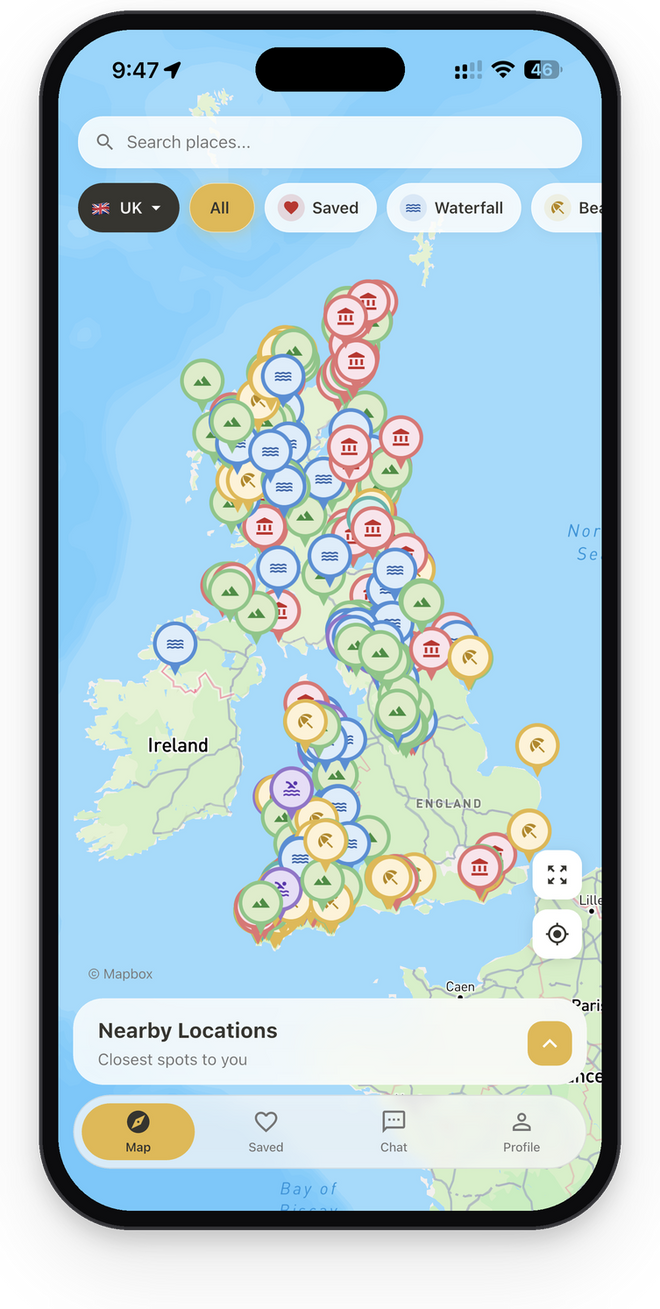
Walking in Scotland? Sole Drift has waterfalls and viewpoints across the Highlands, with the exact location, from 500+ spots across the UK.
What to bring
- Sleeping bag and mat
- Tent or bivvy bag
- Stove and food
- Water filter or tablets
- Head torch
- Map and compass
- Trowel
- Warm dry clothes
- Bags for rubbish
If there's a fire, bring your own fuel. Don't assume wood's waiting for you, and if you use some, leave what you can for the next person.
Top tip: arrive early enough to fetch water and sort your kit in daylight. And say hello. Half the fun of a bothy is the person who turns up at 9 pm with a story.
Your first night

- Find one. The MBA site lists bothies by region.
- Plan the walk. Many are hours from a road.
- Check the restrictions. Look for stalking, lambing or maintenance notices.
- Pack for no bothy. You should be fine if it's full.
- Share the space. Make room for whoever turns up.
- Leave it clean. It should be better than you found it.
Toilets
There aren't any. Go well away from the bothy and any water, bury it properly, and take your paper out. The MBA asks you to follow the code on this too, and it matters more than anything else on this list.
Bothy or wild camp?
In Scotland, you've got good access rights to camp, and our guide to wild camping in the UK explains the limits. A bothy's better in foul weather, while a tent gives you more freedom.
Exploring further? See our Scotland road trip, the West Highland Way and the North Coast 500. Fancy a swim? Try wild swimming in Scotland.
Want a pitch with facilities instead? Our best campsites in the UK include Glen Nevis and Glenbrittle on Skye.
Questions people ask
What is a bothy in Scotland?
A basic shelter in a remote area, left open for walkers to use.
Do you have to pay to stay in a bothy?
No, but you can support the Mountain Bothies Association, which looks after many of them.
Can you book a bothy?
Open bothies aren't booked. Turn up, share the space and bring a tent in case it's full.
Can groups stay in a bothy?
The Bothy Code asks groups of six or more not to use them.
Leave it better
Every bothy is only one bad weekend away from being closed.
Take every bit of rubbish out, keep to the Bothy Code and respect the estates that let them stay open.